
 Français
 Español
 Italiano
 Deutsch
 Português
 Русский
 Nederlands
 English
Contents
- Cape Verdean Escudo Converter (CVE)
- In brief: key information about the currency of Cape Verde
- Everything you need to know about the currency of Cape Verde
- Exchanging your money and paying on-site: tips and traps
- Practical questions and precautions for managing your payments
- Conclusion: the currency in Cape Verde is simple when you are well prepared!
You are preparing your trip to Cape Verde and you are surely wondering what currency you will use on site, where to exchange your euros, and how to manage your budget on a daily basis.
Whether you plan to explore several islands or enjoy the beaches, understanding money matters will clearly simplify your life on site. Discover everything you need to know, from exchanging money to tips for smart payments during your stay!
Planning a trip to Cape Verde?
To organize your stay, we work with a local agency based in Cape Verde, which knows the archipelago island by island. Tailor-made tours, accommodations, inter-island flights, excursions: describe your project, we will connect you, and the agency will prepare a proposal tailored to your desires and budget.
Cape Verdean Escudo Converter (CVE)
In brief: key information about the currency of Cape Verde
- The official currency: the Cape Verdean escudo (CVE), 1 € ≈ 110.27 CVE (fixed rate).
- Possible use of the euro in tourist areas, but the local currency remains essential everywhere else.
- ATMs are present in the city, but rare on some islands and outside major centers.
- Visa cards are widely accepted, Mastercard is less common.
- Withdraw or exchange euros preferably upon arrival: avoid changing money on the street!
- Plan for small denominations and get rid of escudos before leaving: impossible to convert outside the country.
Scroll through the article for examples of prices, traps to avoid, and all the tips to manage your money easily in Cape Verde.

Everything you need to know about the currency of Cape Verde
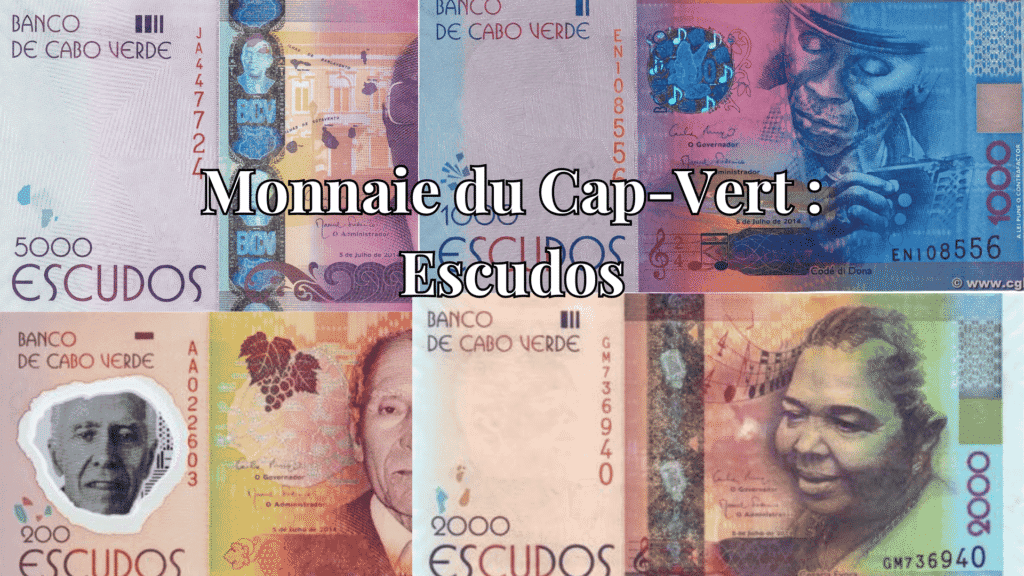
The currency used is the Cape Verdean escudo (CVE), represented by “$” or “Esc”. One escudo is divided into 100 centavos. The different bills and coins in circulation allow for all daily payments:
- Banknotes: 200, 500, 1,000, 2,000, and 5,000 CVE
- Coins: 1, 5, 10, 20, 50, 100 CVE
Local tip: you will sometimes see prices in “units”: 1 unit = 100 escudos. Don’t be caught off guard at restaurants or markets!
To remember: the euro is accepted in the largest hotels, agencies, and some tourist restaurants, but the everyday currency remains the escudo. For eating, moving around, or shopping locally, plan to have cash in CVE.
For more information on practical tourism codes in Cape Verde, click here!
Exchanging your money and paying on-site: tips and traps
Upon arrival, exchange your euros at banks, exchange offices, or at the hotel (commission may apply). Changing money on the street? We avoid that: it’s risky!
- The rate is officially fixed: 1 € = 110.265 CVE (source Wikipedia), but expect small fees depending on the establishment.
- The ATMs are numerous in major cities or on the main islands (Sal, Santiago, São Vicente, Boa Vista…).
- Visa works everywhere (for withdrawing and paying), but Mastercards sometimes fail.
- In small restaurants, markets, taxis, and “local” activities: cash remains king.
Before leaving, remember to empty your stock of escudos! Outside Cape Verde, it is impossible to convert this currency. A good plan? Spend what’s left on souvenirs or at a last nice restaurant.
Need a contact list to find the best spots to exchange your money or to book your cheap flights to Cape Verde👉 Contact our team, we’ll help you with your trip!
Budget in Cape Verde: how much to plan and how to manage it?
Good news, the cost of living remains affordable, especially if you live “local”:
- Meal at a local restaurant: 400–700 CVE (4–7 €)
- Chic restaurant: 1,000–2,000 CVE (10–20 €)
- Bottle of water: 80–120 CVE
- Local beer: 100–200 CVE
- Espresso coffee: 60–90 CVE
- Double room (night): 3,000–6,000 CVE (30–60 €)
Prices soar on tourist islands (Sal, Boa Vista), but you can easily manage your budget:
Opt for small restaurants, markets, and travel off-season to limit your expenses. And favor local transportation for authentic experiences at low prices.
Prepare your stay without stress with all our great plans to visit Cape Verde and our Cape Verde budget tips.
Need a quote or ideas for itineraries? Request here!

Practical questions and precautions for managing your payments
Some friendly advice to avoid hassles with the Cape Verde currency:
- Avoid arriving with only large bills, some merchants have difficulty giving change.
- On small islands, ATMs are sometimes absent. Take cash before you go exploring.
- The Cape Verde airports almost all have an ATM or exchange office, but always plan to have a small amount in euros to start without stress.
- The US dollar and other foreign currencies are very rarely accepted.
In markets, in charming villages, or during an unexpected trip, having escudos on hand can be extremely practical. Don’t hesitate to ask locals for prices in units, it’s a common habit!
Find all our practical tips to prepare your trip well and our info on inter-island travel to best plan your withdrawals and budget.
A personalized stay? Contact us!
What you must not forget!
Before leaving Cape Verde:
- Spend or exchange your remaining escudos — you won’t be able to change them elsewhere.
- Check the compatibility of your bank card (Visa preferred).
- Prepare some cash for small expenses around your accommodation or in the villages.
Be sure to check the Cape Verde visa & formalities guide to avoid unpleasant surprises upon your arrival!
If you are traveling with family or in adventure mode, also check our dedicated articles: exploring Cape Verde with family or going trekking on the most beautiful paths.
Conclusion: the currency in Cape Verde is simple when you are well prepared!
- Always know where, when, and how to exchange euros or withdraw escudos to avoid payment issues.
- Adapt your budget to your travel style, anticipate the absence of ATMs on some islands, and favor the Visa card.
- Spend your escudos before leaving the country, and contact us for personalized advice or a tailored quote: talk to a Casa di CV expert.
Want to make the most of your time there? Find other practical files to choose the best island according to your desires, know when to go to Cape Verde, or build an unforgettable itinerary!
Are you planning a trip to Cape Verde?
To organize your stay, we work with a local agency based in Cape Verde, which knows the archipelago island by island. Tailor-made tours, accommodation, inter-island flights, excursions: describe your project, we put you in touch and the agency prepares a proposal tailored to your wishes and budget.

Written by Adilson Gomes Garcia
Founder of Casa di CV and Gomia-Voyage, I was born in Santiago and I am committed to showcasing African territories, starting with Cape Verde. Through my platforms, I help travelers and curious minds better understand these destinations, their cultures and their realities, so they can plan authentic and respectful trips. My goal: to offer a clear, local and useful perspective for discovering Africa as it really is, with its riches and its identity.


