
 Français
 Español
 Italiano
 Deutsch
 Português
 Русский
 Nederlands
 English
Contents
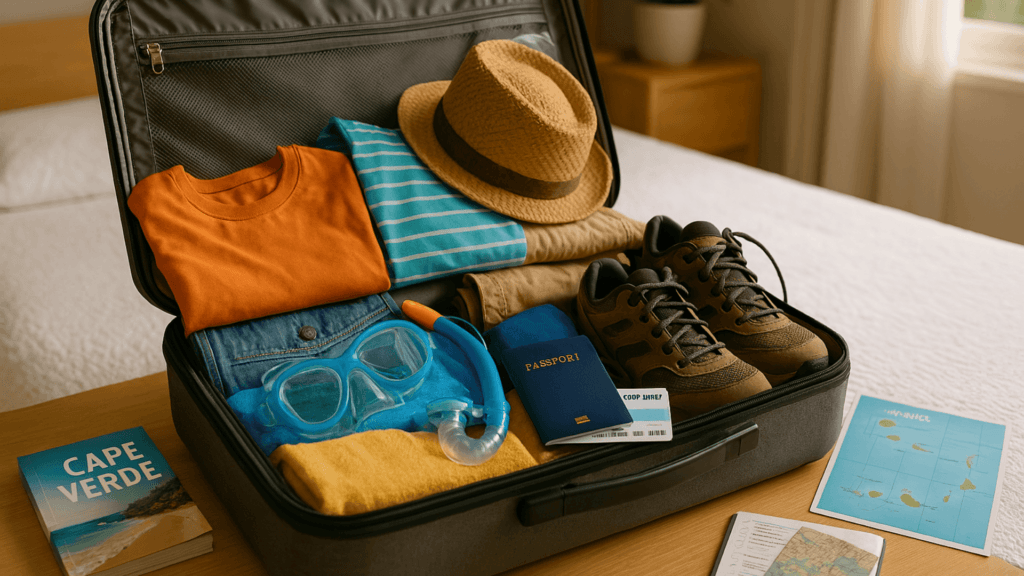
Packing your suitcase for Cape Verde may seem simple… until you realize that the climate, the varied activities, and certain local specifics require a minimum of organization. Whether you are heading out to explore the beaches of Sal, hike the volcanic trails of Fogo, or stroll through the streets of Mindelo, every detail matters.
On Casa di CV, your guide for a successful trip to Cape Verde, we help you not to forget anything. In this article, discover a complete checklist for packing your suitcase for Cape Verde, with practical tips, suitable for all seasons and all adventure desires.
Planning a trip to Cape Verde?
To organize your stay, we work with a local agency based in Cape Verde, which knows the archipelago island by island. Customized tours, accommodations, inter-island flights, excursions: describe your project, we will connect you, and the agency will prepare a proposal tailored to your desires and budget.
Clothing Suitable for the Climate

Cape Verde has an arid tropical climate, offering almost constant sunshine throughout the year and temperatures ranging from 22 to 30 °C. This situation directly impacts the contents of your suitcase. The key is to choose lightweight, comfortable, and versatile clothing.
✈️ Want a little help organizing your stay? Fill out our form: our partner agency in Cape Verde will advise you and offer the best plans according to your desires.
1.1. Lightweight Clothing for the Day
Opt for lightweight, breathable outfits that dry quickly: cotton or linen t-shirts, tank tops, shorts, flowy dresses… These clothes will be your best allies against the heat and the often-present wind on islands like Sal or Boa Vista.
Prefer light colors to avoid attracting heat, and don’t forget to pack a few swimsuits, even if you’re not going solely for the beach: the temptation to take a dip is everywhere.
👉 To better understand how the climate influences your clothing choices, check out our complete article on when to go to Cape Verde according to the seasons.
1.2. Clothing for Sports Activities and Excursions
If you plan to hike on Santo Antão, bike in Santiago, or kite surf in Sal, pack clothing suitable for exertion: leggings or technical shorts, breathable t-shirts, lightweight sports or hiking shoes.
Don’t forget a cap or bandana to protect your head, as well as a lightweight windbreaker for high-altitude trips or boat rides.
1.3. Clothing for Cooler Evenings
Even though the days are warm, the evenings can be cool, especially at higher altitudes or between December and March. A light sweater, cardigan, or jacket is usually sufficient.
This is also an opportunity to add a dressier touch to your wardrobe if you plan to go out for dinner in Mindelo or Praia.
👉 Not sure where to start organizing your itinerary, activities, or belongings? Fill out our form and receive a personalized proposal.
Essential Accessories
Beyond clothing, some accessories can make all the difference during your stay in Cape Verde. With intense sun, regular wind, and beach activities, it’s better to be well-equipped to fully enjoy the archipelago.
2.1. Sunscreens
The Cape Verdean sun is powerful, even when it’s overcast. Bring a high SPF sunscreen (preferably SPF 50), as well as a lip balm and after-sun lotion. These essentials protect your skin throughout the day.
Remember that UV rays are intensified by winds and the proximity to the equator, even outside the hottest months.
2.2. Beach Accessories
A lightweight, quick-drying microfiber towel will be perfect for your days in Santa Maria or Tarrafal. Add comfortable sandals, a beach bag, and a small waterproof bag if you plan to go boating or on sea excursions.
☀️ Are you leaving soon? Fill out our form to receive tailored advice and our best local addresses.
2.3. Hats and Sunglasses
Sunglasses with UV protection, a wide-brimmed hat, or a cap: these items are not just for style; they are crucial for preventing sunburn. Don’t forget to bring a cord to attach your glasses if you plan a mountain hike or a boat trip.
Technological Equipment and Documents
Even for a destination where you seek to disconnect, some high-tech items and administrative papers are essential. A minimum of organization will save you unnecessary hassles once you arrive.
3.1. Electronic Devices
Smartphone, charger, headphones, camera if you love capturing your travels… Bring only the essentials. You can easily buy a local SIM card if needed, especially in Praia or Sal.
Tip: remember to disable mobile data if you don’t have an international plan, or activate a temporary plan from France.
3.2. Adapters and Chargers
The plugs in Cape Verde are generally of the European type (type C or F), so they are compatible with French chargers. But a power strip or multi-USB charger can be very useful, especially if you are traveling as a couple or with friends.
Don’t forget an external battery, especially if you plan long excursions without access to a power outlet.
3.3. Essential Travel Documents
Identification papers, a copy of your passport, plane tickets, travel insurance certificate, accommodation proof, vaccination certificate if needed… Prepare a folder with all your important documents.
Also, consider scanning your papers and saving them on a cloud. In case of loss or theft, this can save you a lot of complications.
👉 Find our dedicated article on entry requirements and necessary documents for traveling to Cape Verde to make sure you don’t forget anything.
✈️ For complete assistance, fill out our form and we’ll guide you at every step.
Health and Wellness Products

Even though Cape Verde is a relatively safe destination, it's better to prepare some essential health and hygiene items to deal with the little surprises of everyday life. It's better to be prepared than to rush to the pharmacy once you are there.
4.1. First Aid Kit
A basic kit is enough: band-aids, disinfectant, sunscreen or insect bite cream, paracetamol or ibuprofen, intestinal antiseptic. If you are hiking, consider blister band-aids and repair balm.
This saves you from last-minute searches in a language you may not always master, especially on the smaller islands.
4.2. Personal Hygiene Products
Shower gel, shampoo, toothpaste, toothbrush, deodorant, moisturizer… try to take travel-sized formats to save space. A small bottle of hand sanitizer is useful, especially in public places or markets.
If you follow an eco-friendly routine, prioritize solid or refillable products.
4.3. Medications and Prescriptions
If you are on medication, don't forget to bring the necessary amount for the duration of your stay, along with your prescription in both paper and digital formats. Cape Verde has pharmacies, but they do not always have all the European products.
Packing for Cape Verde means anticipating activities, the climate, local specifics, and surprises, to enjoy every moment on site. Whether you are going for relaxation, adventure, or cultural discovery, this checklist will help you travel light but smart.
Dreaming of a hassle-free stay? Fill out our form: we will connect you with our partner agency in Cape Verde. Accommodations, activities, practical advice: they organize a stay that suits you.
Are you planning a trip to Cape Verde?
To organize your stay, we work with a local agency based in Cape Verde, which knows the archipelago island by island. Tailor-made tours, accommodation, inter-island flights, excursions: describe your project, we put you in touch and the agency prepares a proposal tailored to your wishes and budget.

Written by Adilson Gomes Garcia
Founder of Casa di CV and Gomia-Voyage, I was born in Santiago and I am committed to showcasing African territories, starting with Cape Verde. Through my platforms, I help travelers and curious minds better understand these destinations, their cultures and their realities, so they can plan authentic and respectful trips. My goal: to offer a clear, local and useful perspective for discovering Africa as it really is, with its riches and its identity.


