 Français
 Español
 Italiano
 Deutsch
 Português
 Русский
 Nederlands
 English

Contents
- In brief – all about funana in Cape Verde
- The origin of funana: the story of a Cape Verdean music
- The instruments and rhythm of funana: the DNA of a genre
- Funana: much more than music, a popular dance
- The great groups & artists of funana
- Funaná today: where to listen, how to experience it?
- Funaná and hospitality: focus on the Riu Funana in Sal
- FAQ – Practical information and funana culture
- To go further: resources & discoveries
- Conclusion: funana, the rhythm that makes Cape Verde vibrate
Want to discover Cape Verdean culture? The funaná, music and dance born in Santiago, is a symbol of energy, pride, and resistance. Unmissable in Sal, Praia, and throughout the archipelago, this catchy style livens up parties and beaches.
On Casa di CV, we provide everything you need to truly experience funaná, with anecdotes and practical tips.
Are you considering a stay in Cape Verde?
To organize your stay, we work with a local agency based in Cape Verde, which knows the archipelago island by island. Customized tours, accommodations, inter-island flights, excursions: describe your project, we will connect you, and the agency will prepare a proposal tailored to your desires and budget.
In brief – all about funana in Cape Verde
- The funana is an irresistible music genre and dance, born on the island of Santiago.
- Key instruments: the gaita (diatonic accordion) and the ferrinho (scraped iron bar).
- From a marginalized "rural music," it became the symbol of independence and Cape Verdean identity after 1975.
- Atmosphere? An ultra-danceable rhythm (2/4 time), festive lyrics, contagious energy – everyone dances!
- Mythical groups like Bulimundo, Ferro Gaita, or Bitori have modernized and exported funana internationally.
- No party without funana: a must-try in the evening, during a festival, or a local event on the islands.
Do you want to experience this atmosphere? Discover practical information, places, and the best tips to get started: read on and contact our partner agency in Cape Verde to prepare a top-notch immersion! I want to organize my musical trip!
The origin of funana: the story of a Cape Verdean music
The funana has its roots on the island of Santiago in the 19th century. Initially, this music genre is the joyful expression of Cape Verdean peasants, banned from playing guitar by Portuguese colonists, who then repurposed the accordion (gaita) and the ferrinho.
The term funaná seems linked to a famous duo from Santiago, known for their talent: Funa, an expert on the gaita, and Naná, who supported him with the ferrinho, an idiophone instrument. Their synergy and talent contributed to the birth of this emblematic dance and music.
- Long marginalized, seen as "primitive" or "rustic" by the colonial elite, it was even banned in the city until Cape Verde's independence in 1975.
- From the 1980s, the youth in the cities embraced it: Bulimundo electrified the style, the parties in Praia or Assomada ignited.
- 1990s: funana set out to conquer the world thanks to Ferro Gaita and the diaspora.
Funana is the revenge of rurality and tradition against colonization. It illustrates the mixing and affirmation of the Cape Verdean soul!
To understand everything about the cultural context, feel free to explore our complete file on the history of Cape Verde.
The instruments and rhythm of funana: the DNA of a genre
The real magic of funana: it consists of two signature instruments, with raw energy and irresistible groove.
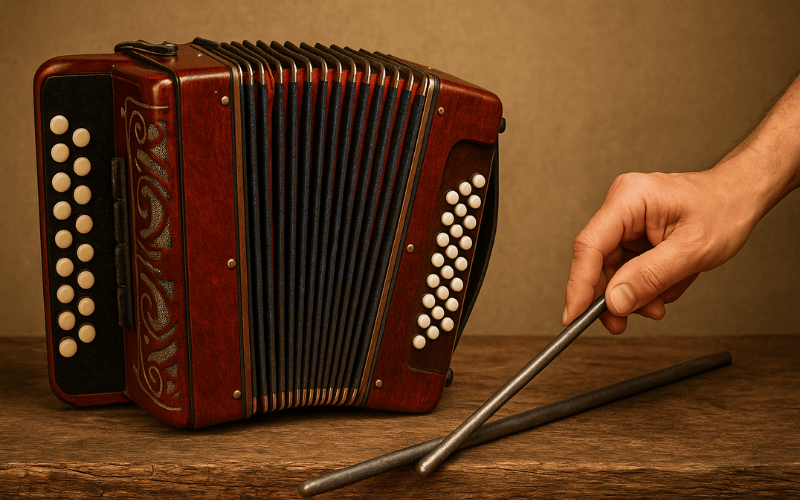
- Gaita: diatonic accordion adopted and locally transformed since the late 19th century.
- Ferrinho: a rubbed iron rod, accentuating the rhythm (often in 2/4), develops a unique and easily recognizable sound.
- In modern versions, electric bass, drums, or keyboards sometimes join for a “total evening” effect.
Result: a fast tempo, a heavy beat, haunting riffs that call for dancing… Whether you are in Sal, Boa Vista, or Fogo, it's impossible to resist!
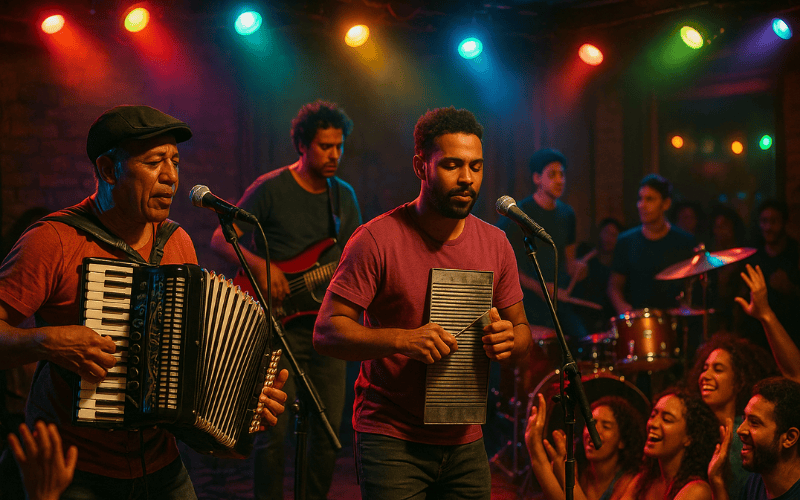
Funana live is a shot of pure energy: just try not to move, impossible!
Funana: much more than music, a popular dance
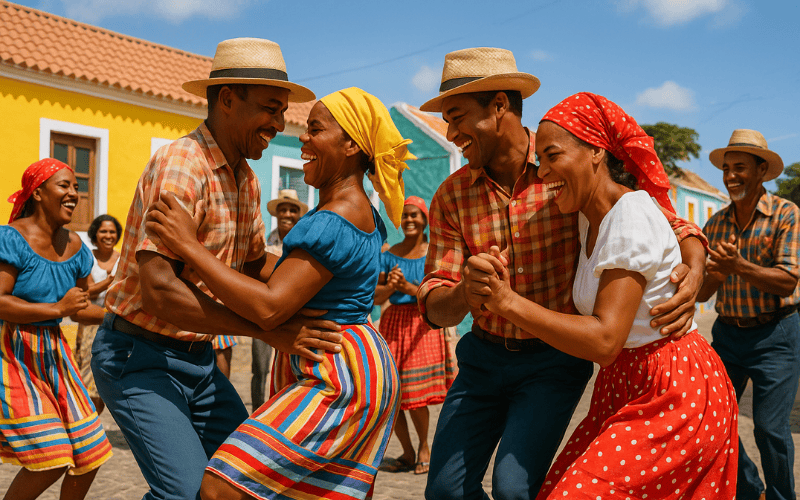
Dancing the funana is a whole experience. Tradition dictates that you dance in pairs, close together, with the lower body moving synchronously to a frantic rhythm.
- Ultra-physical dance, direct connection with the music and other festival-goers.
- Party spirit, sometimes risqué, always joyful: we come to “celebrate life” more than to perform.
- No party, wedding, baptism, or event is conceived without a few well-calibrated tracks!
Funana is the antidote to morna: we forget nostalgia, we celebrate life!
Want to experience it? Organize your trip to Cape Verde with our partner agency and participate in workshops to get initiated into funana.
The great groups & artists of funana
Some groups have marked history and ensured the rise of funana beyond Santiago.
- Bulimundo: pioneer of modernization, it launched electrified funana in the 1980s.
- Ferro Gaita: the most emblematic, spread the genre internationally from the 90s.
- Bitori, Finaçon, Chando Graciosa… Many musicians continue the tradition while injecting modernity.
Want a funana night in Praia or Santa Maria? Indicate it on our form for a direct connection with our local partners!
Also find the best addresses for hotels in Sal where the funana atmosphere is guaranteed.
Funaná today: where to listen, how to experience it?
Funana is no longer reserved for villages: it now animates all the islands, appearing in festivals, bars, hotels, or trendy beaches. Here are some tips to feel the local rhythm:
- Where to spend a funana evening? Popular parties in Praia, concerts in Santa Maria, live events in hotels in Boa Vista or Fogo…
- Want a music or dance workshop? Inquire via our form: we will connect you with passionate teachers and guides.
- Prefer to discover the history? The music museum in Praia and many local experts tell the saga of this music that has conquered the world.
Adilson's tip: the best way to experience funana is to let go and say “yes” to the party, even without being a dancer! The atmosphere is family-friendly and ultra-welcoming.
Before your departure, discover all the practical information to organize your trip to Cape Verde and the lively spots on the island of Sal.
Funaná and hospitality: focus on the Riu Funana in Sal
In Sal, one of the most renowned hotels, the Riu Funana, captures both the festive spirit and warm hospitality of Cape Verde. Key points:
- Proximity: ideally located near Santa Maria, perfect for mixing local ambiance and international comfort.
- Atmosphere: More intimate than other resorts, excellent service and easy access to the beach.
- Ideal for tasting funana “live”: lively evenings, dance or music workshops organized periodically.
Unsure between the Riu Funana and another hotel? Check our complete comparison of Riu hotels in Cape Verde to choose according to your desires (proximity to activities, authenticity, beach, etc.).
Travelers prefer the Riu Funana for the quality of the rooms, proximity to the city, and access to local activities!
FAQ – Practical information and funana culture
- Is it easy to participate in a funana evening as a tourist?
Absolutely! Our local partners regularly organize outings and initiations for everyone, even without experience. - Can you see funana on all the islands of Cape Verde?
Traditional funana is mainly associated with Santiago, but it now resonates throughout the archipelago, from major festivals to hotel animations. Check our guides: in Santiago or in Boa Vista.
Of course: local shops, markets, and festivals are full of musical gems to give or treat yourself.
Many other answers await you by directly contacting our team via this form.
To go further: resources & discoveries
- See the Wikipedia article on funana
- Detailed analysis on African Music Library
- Compilation “The Funaná Revolt in 1990s Cabo Verde”
Conclusion: funana, the rhythm that makes Cape Verde vibrate
- Funana illustrates the history, the joy of living, and Cape Verde's ability to transform tradition into a popular celebration accessible to all.
- It is a must to discover “the real Cape Verde,” to be experienced at least once during a trip to the archipelago!
- To make the most of it: find out about the best places, festivals, hotels, and partners through our passionate local network.
Ready to dance, vibrate, explore? Prepare an unforgettable funana experience right now!
Are you planning a trip to Cape Verde?
To organize your stay, we work with a local agency based in Cape Verde, which knows the archipelago island by island. Tailor-made tours, accommodation, inter-island flights, excursions: describe your project, we put you in touch and the agency prepares a proposal tailored to your wishes and budget.

Written by Adilson Gomes Garcia
Founder of Casa di CV and Gomia-Voyage, I was born in Santiago and I am committed to showcasing African territories, starting with Cape Verde. Through my platforms, I help travelers and curious minds better understand these destinations, their cultures and their realities, so they can plan authentic and respectful trips. My goal: to offer a clear, local and useful perspective for discovering Africa as it really is, with its riches and its identity.