
 Français
 Español
 Italiano
 Deutsch
 Português
 Русский
 Nederlands
 English
Contents

Need help with your inter-island travel in Cape Verde?
To organize your stay, we work with a local agency based in Cape Verde, which knows the archipelago island by island. Tailor-made tours, accommodations, inter-island flights, excursions: describe your project, we will connect you, and the agency will prepare a proposal suited to your desires and budget.
In brief
- Two options to connect the islands: plane (Cabo Verde Airlines) and ferry (CV Interilhas).
- Plane:
- From 20 min to 2h30 depending on the connection
- 50 – 150 € one way
- flights several times/week
- convenient if you are short on time but sensitive to the weather.
- Ferry:
- 8 – 40 € depending on the distance
- frequent crossings São Vicente ↔ Santo Antão (1 h)
- 2-3 ×/week for long-distance routes
- authentic experience but longer journeys.
- Choice:
- tight budget → ferry
- tight schedule or rough seas → plane.
- Best window Nov-Jun for calm seas
- book early in high season (Dec-Apr, festivals).
- Practical: passport on you, light luggage, check weather schedules, allow margin for delays, online tickets to secure your place (or let our partners handle it!).
Do you need help planning your travel between the islands of Cape Verde?
Entrust the complete organization to our partner agency in Cape Verde for your trip and travel with peace of mind.
Domestic flights in Cape Verde

Air transport is a quick and efficient way to travel between the islands of Cape Verde. Domestic flights save time, especially when you want to connect to more distant islands. Here are the main details about the available airlines, flight frequency, as well as prices and booking options.
Air connections between the islands
- Island of Sal ; Amílcar Cabral International Airport (SID)
Sal -> Boa Vista
Sal -> Santiago
Sal -> São Vicente
Sal -> São Nicolau - Island of Boa Vista ; Aristides Pereira International Airport (BVC)
Boa Vista -> Sal
Boa Vista -> Santiago - Island of Santiago ; Nelson Mandela International Airport (RAI)
Santiago -> Boa Vista
Santiago -> Fogo
Santiago -> Maio
Santiago -> Sal
Santiago -> São Vicente - Island of Fogo ; Sao Filipe Airport (SFL)
Fogo -> Santiago - Island of Maio ; Vila Do Maio Airport (MMO)
Maio -> Santiago - Island of São Nicolau ; Preguiça Airport (SNE)
São Nicolau -> Sal
São Nicolau -> São Vicente - Island of São Vicente ; Cesária Évora International Airport (VXE)
São Vicente -> Sal
Available airlines
To travel between the Cape Verdean islands, the main airline available is Cabo Verde Airlines. This airline offers regular connections between the main islands of the archipelago, such as Santiago, Sal, São Vicente, and Boa Vista.
Flight frequency and schedules
Flights between the islands of Cape Verde are quite regular, but their frequency varies depending on the islands and the season. For example, connections between the main islands, such as those from Praia (Santiago) to São Vicente or Sal, are operated several times a week. However, some smaller islands, like Maio or São Nicolau, may have less frequent flights.
Let our partners take care of your inter-island connections and fully enjoy the archipelago without any hassle.
During the high tourist season (from December to April and during the summer), the frequency of flights is often increased to meet the growing demand from travelers. Conversely, during the low season, flight schedules may be more limited. It is therefore recommended to check schedules in advance and book early to avoid inconveniences related to a lack of availability.
Prices and bookings
The prices of inter-island flights can vary depending on the booking period and seasonality. In general, the price of one-way tickets ranges between 50 € and 150 €, depending on the distance and the time of booking. Booking in advance is often the best solution to obtain more favorable rates, especially in high season.
Reservations can be made directly on the websites of airlines such as Cabo Verde Airlines, or through online travel platforms. It is also possible to book tickets at local agencies once on site, but this option is less recommended during peak periods due to the risk of unavailability.
Need a hotel for your stay? Find the best price here!
The ferry in Cape Verde
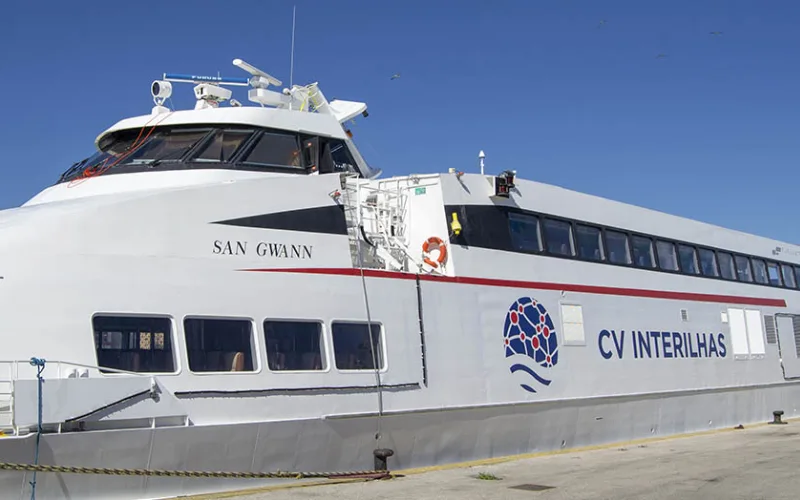
Maritime transport is one of the most popular ways to travel between the islands of Cape Verde. Ferries not only allow for affordable travel but also provide stunning views of the Atlantic Ocean that surrounds the archipelago. Here is essential information about ferries, shipping companies, schedules, and booking options.
Maritime connections between the islands
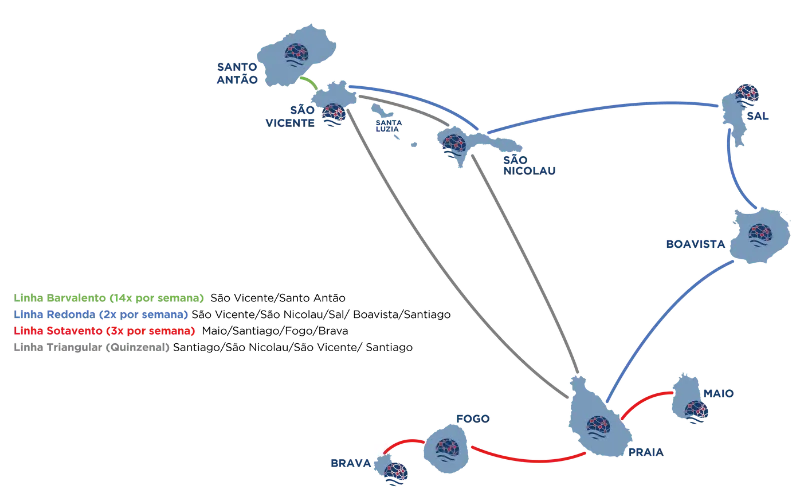
São Vicente/ Santo Antão: 14 times a week.
São Vicente/ São Nicolau / Sal / Boa Vista / Santiago: 2 times a week.
Maio / Santiago / Fogo / Brava: 3 times a week.
Santiago / São Nicolau / São Vicente / Santiago: once every 15 days.
Ferries and shipping companies
The various islands of Cape Verde are mainly connected by CV Interilhas, a company offering regular crossings between populated islands. As the main ferry operator, CV Interilhas connects most of the islands, including Santiago, São Vicente, Santo Antão, Sal, Maio, and Boa Vista. These trips provide an authentic opportunity to explore Cape Verdean maritime culture, allowing travelers to meet locals.
Depending on the islands you wish to visit, there are ferries of different sizes, some more modern and others more traditional, offering a varied experience depending on the routes. Porto Novo (Santo Antão), Mindelo (São Vicente), and Praia (Santiago) are among the busiest ports in the Cape Verdean maritime network.
Let our partners take care of your inter-island connections and fully enjoy the archipelago without any hassle.
Ferry schedules
Ferry schedules in Cape Verde can vary depending on the seasons and weather conditions. Generally, the most frequent crossings occur between the main islands, such as São Vicente and Santo Antão, which are served multiple times a day due to high tourist demand. This crossing, which connects Mindelo to Porto Novo, is particularly popular and takes about one hour.
For the other islands, ferries are often less regular and may only operate a few times a week. For example:
- Santiago to Fogo: about twice a week, for a duration of 4 to 5 hours.
- Sal to São Nicolau or Boa Vista: crossings are available several times a month, depending on the season and sea conditions.
It is therefore recommended to check the schedules in advance on the CV Interilhas website or by contacting local agencies, especially if you are traveling during high season or planning a tight itinerary.
Booking options and costs
Ferry tickets can be booked online on the CV Interilhas website, directly at the port ticket offices, or through local agencies. Booking online is often the best option, as it secures your spot and avoids long queues, especially during peak times.
Ferry crossing prices vary depending on the distance between the islands and the type of ferry used. Here is an estimate of the costs:
- Mindelo (São Vicente) to Porto Novo (Santo Antão): About 8 to 10 euros per trip, making it one of the most affordable options.
- Praia (Santiago) to São Filipe (Fogo): About 20 to 25 euros per trip, depending on the class chosen (standard or premium).
- Sal to São Nicolau: Prices can be higher, reaching 30 to 40 euros, due to the greater distance.
Traveling by ferry is an excellent way to discover the islands of Cape Verde while enjoying the marine landscapes. However, it is important to note that schedules can be influenced by weather conditions, which can sometimes lead to delays or cancellations. It is therefore advisable to allow for some flexibility in your itinerary.
Comparison between air and maritime transport
When it comes to traveling between the islands of Cape Verde, two main options are available to travelers: air transport and maritime transport. Each option has its advantages and disadvantages depending on the needs and preferences of the traveler. Here is a comprehensive comparison of the two modes of transport.
Advantages and disadvantages of flights
Advantages:
- Speed: Air transport is undoubtedly the fastest way to travel between the islands. For example, a flight from Santiago to São Vicente takes only about 50 minutes, compared to the many hours required by ferry.
- Frequency: The main islands are connected by regular flights, which offers more flexibility, especially for travelers with a tight schedule.
- Comfort: Planes offer more comfort over long distances, especially when the sea is rough, which could make ferry travel more difficult.
Disadvantages:
- High cost: The price of flights is generally higher than that of ferries, especially for last-minute trips. A ticket between Sal and Santiago can cost between €50 and €150 depending on the season and how far in advance you book.
- Dependence on weather conditions: Although flights are quick, they are also subject to weather conditions and can sometimes be delayed or canceled in bad weather.
Advantages and disadvantages of ferries
Advantages:
- Affordable cost: Ferries are much more economical than flights. For example, the crossing between São Vicente and Santo Antão costs about €8 to €10.
- Authentic experience: Traveling by ferry offers a different immersion, allowing you to enjoy the marine landscapes and mingle with the locals. For those who want to experience the authenticity of Cape Verdean life, the ferry is an excellent option.
Disadvantages:
- Travel duration: Ferry crossings can be long, especially between distant islands. For example, a ferry between Santiago and Fogo takes between 4 and 5 hours, while a flight takes about 30 minutes.
- Variability of schedules: Ferries are less frequent than flights, and schedules can be affected by weather conditions. It is not uncommon for crossings to be canceled due to rough seas, which can disrupt travel plans.
Criteria for choosing between the two options
The choice between air and sea transport depends on several criteria, such as budget, available time, and the type of experience desired.
- Budget: For travelers on a limited budget, the ferry is often the most economical option, even if it means longer trips.
- Available time: If you have little time and want to explore several islands in a week, flights are the best option to optimize your travel.
- Desired experience: Ferries offer stunning views of the Atlantic Ocean, allowing for a more immersive and authentic experience of Cape Verde. However, for those who prefer speed and comfort, flights are to be favored.
Travel times depending on the mode of transport
To help you better choose between the plane and the ferry, here is a summary of travel times for some popular routes:
- Praia (Santiago) to São Vicente:
- Flight: About 50 minutes.
- Ferry: About 10 to 12 hours, sometimes including a stopover.
- Mindelo (São Vicente) to Porto Novo (Santo Antão):
- Ferry: About 1 hour (no air link is available).
- Praia (Santiago) to São Filipe (Fogo):
- Flight: About 30 minutes.
- Ferry: About 4 to 5 hours.
- Sal to Boa Vista:
- Flight: About 20 minutes.
- Ferry: About 3 to 4 hours, depending on sea conditions.
Practical tips for traveling between the islands
To make the most of your trip to Cape Verde and navigate easily between the islands, it is useful to know some practical tips. These tips will help you organize your stay while avoiding unexpected events and maximizing your discovery time.
Best times to travel
The Cape Verde is a pleasant destination to visit year-round, but certain times are more favorable for traveling between the islands, especially regarding sea stability.
- November to June is the ideal time for inter-island travel, with relatively calm seas and a dry climate. Ferry crossings are more regular, and the risks of cancellation due to weather are lower.
- July to October is the rainy season, with a more humid climate and often rougher seas. During this period, ferry crossings may be affected by weather conditions, and it is advisable to plan some time margins for travel.
Necessary documents and preparations
- Identification: For international travelers, a valid passport is required to enter Cape Verde, but once on site, no specific documents are required for inter-island travel, other than your identification. Make sure to have it with you at all times.
- Advance booking: Whether for flights or ferries, it is highly recommended to book your tickets in advance, especially during peak season (from December to April). This ensures availability and often allows you to benefit from better rates.
- Luggage: For air travel, luggage rules are similar to those for international flights, but be sure to check the weight restrictions imposed by the airline. For ferries, there are generally no strict restrictions, but it is advisable to travel light, especially on shorter crossings.
Local knowledge and travel tips
- Flexibility : When traveling between the islands, it is important to be flexible. Weather conditions can cause delays for both flights and ferries. Always allow for a safety margin in your planning to avoid any setbacks.
- Book early during peak season : During busy periods, such as Christmas, Easter, or festivals (like the São Vicente Carnival in February), ferry and flight tickets can sell out quickly. Book your transport tickets as soon as you have set your itinerary.
- Ask the locals : The residents of the different islands are a valuable source of information. Don’t hesitate to ask for advice on the best times to travel, sea conditions, or transport options. Additionally, locals can point out shortcuts or alternative routes to save time.
- The companies : For flights, Cabo Verde Airlines remains the main airline, while for ferries, CV Interilhas is the main operator. Regularly checking their websites or going directly to the ticket counters is a good practice to stay informed about any schedule changes.
- Seat selection : If you take the ferry between São Vicente and Santo Antão, for example, try to sit on the side where you will have an unobstructed view of the mountainous coasts. The scenery is simply spectacular, especially in the morning when the light is soft.
These practical tips will help you organize your travels between the islands of Cape Verde. By taking a few simple precautions, you can fully enjoy the wonders of the archipelago without worrying about transport issues.
Traveling between the islands of Cape Verde: In summary
Whether you choose direct flights or enriching ferries, exploring the islands of Cape Verde provides unforgettable experiences. By preparing well, booking in advance, and being a little flexible, you can savor each island and all that this archipelago has to offer. Whether you seek adventure, relaxation, or cultural enrichment, Cape Verde awaits you with its famous morabeza.
To further your planning, feel free to consult our guide "Which island to choose according to your expectations?". This will help you determine which islands to explore based on your desires for adventure, relaxation, or cultural discovery, and to maximize each inter-island trip during your stay in Cape Verde.
Are you planning a trip to Cape Verde?
To organize your stay, we work with a local agency based in Cape Verde, which knows the archipelago island by island. Tailor-made tours, accommodation, inter-island flights, excursions: describe your project, we put you in touch and the agency prepares a proposal tailored to your wishes and budget.

Written by Adilson Gomes Garcia
Founder of Casa di CV and Gomia-Voyage, I was born in Santiago and I am committed to showcasing African territories, starting with Cape Verde. Through my platforms, I help travelers and curious minds better understand these destinations, their cultures and their realities, so they can plan authentic and respectful trips. My goal: to offer a clear, local and useful perspective for discovering Africa as it really is, with its riches and its identity.