
 Français
 Español
 Italiano
 Deutsch
 Português
 Русский
 Nederlands
 English
Contents
Seven days in Cape Verde is best spent on two islands, rarely more. The archipelago has ten islands that are very different from one another, and each island change costs you half a day: it’s better to pick one mood and enjoy it without rushing.
We suggest three sample weeks, with the night-by-night breakdown and what each one demands in fitness and logistics, so you can quickly find the one that suits you.
In Brief
- Three combinations work well in one week: Sal and Boa Vista for beaches, São Vicente and Santo Antão for hiking and music, Santiago and Fogo for history and the volcano.
- Between islands, flights are operated by CVsky, the state-owned airline; boats are run by CV Interilhas, with Nôs Ferry sailing between São Vicente and Santo Antão.
- Before departure, the EASE form must be completed online at least 5 days before arrival; the security tax (TSA) costs 3,400 CVE (about €31) online and 6,800 CVE (about €62) at the counter.
- Your passport must be valid for 6 months after arrival; stays of under 30 days require no visa for European visitors.
- Pico do Fogo must be climbed with a guide, and sea crossings to Fogo are often disrupted: plan to fly to this island.
Planning a trip to Cape Verde?
Tell us about your plans: we will connect you with a local agency that knows every island and will prepare a proposal tailored to your wishes and budget.
Seven Days, Two Islands: How to Choose

The best starting point is what you want to bring home: sand and sea, landscapes to explore on foot, or stories. Once that’s settled, the rest of the week almost organizes itself.
| Formula | Islands | Best for |
|---|---|---|
| Beaches and wind sports | Sal, Boa Vista | Relaxation, kitesurfing, dunes, turtles; little walking |
| Hiking and music | São Vicente, Santo Antão | Walkers, lovers of morna and green valleys |
| History and volcano | Santiago, Fogo | Curious travelers, good walkers, interest in heritage |
Whether you travel between islands by plane or by boat, schedules change with the seasons and the sea; if your week is tight, it’s best to get quotes for inter-island flights before booking your accommodation.
Sal and Boa Vista: The Beach Week

Sal is often the gateway, and you can happily spend the first three nights there. In Santa Maria, in the south, bars and restaurants line the shore, and the sunset sets the tempo of the evenings. During the day, there’s plenty to choose from: diving on wrecks, rays and reefs, kitesurfing lessons at Kite Beach, or a horseback ride starting from the salt flats near the beach. Set aside half a day for the Pedra de Lume salt pans: the site sits in an extinct crater several meters below sea level, and the water is so salty that you float effortlessly. Details on specific spots are in our page things to do in Sal.
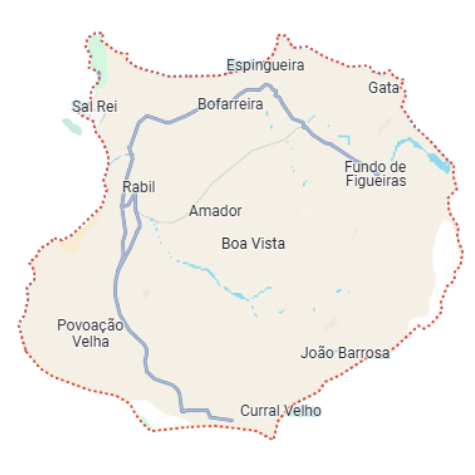
For the next four nights, head to Boa Vista, flatter, wilder and the least densely populated island in the archipelago, with about 37% of its territory protected. Its beaches are nesting sites for loggerhead turtles: a guided outing lets you watch them from a distance without touching them. The Viana desert and its dunes can be explored by buggy or quad bike, an activity the hotel can arrange very easily, and Chaves beach suits days with no plans. Sal Rei, the capital, offers small streets, colonial churches and a market square for souvenirs; we cover the rest in things to do in Boa Vista.
This formula requires little effort but is worth arranging in advance, as excursions leave early and spaces are limited. You can request a quote for a week on Sal and Boa Vista with transfers included.
São Vicente and Santo Antão: The Hiking and Music Week
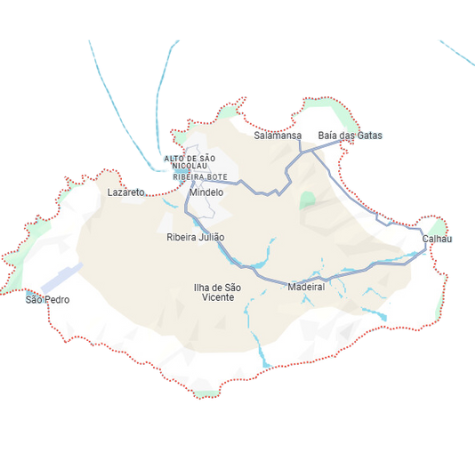
Start in Mindelo, on São Vicente, which many call the cultural capital of the country. A former coal port on the Porto Grande bay, the city lives to the rhythm of morna and coladeira, and Cesária Évora is still a daily presence in its cafés. Two nights are enough to wander, listen to live music and taste the catch of the day; our ideas for visits are gathered in things to do in Mindelo. For a beach break, Baía das Gatas, in the northeast of the island, offers a beautiful horizon; bring a layer against the wind and high-SPF sunscreen, as the sun is strong despite the gusts.
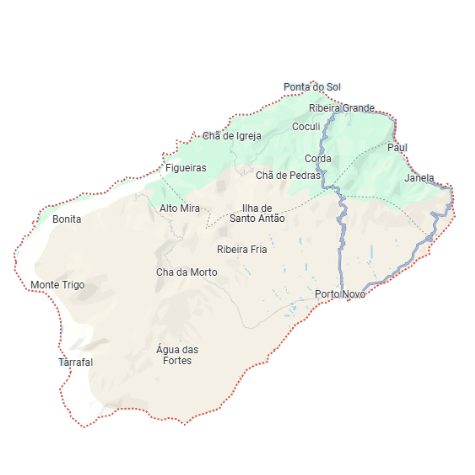
The following four nights are spent on Santo Antão, reached by ferry from Mindelo. The second-largest island in the country by area (785 km²), it peaks at 1,979 meters at Tope de Coroa and is carved by deep valleys. In the north, the Paul valley is farmed in terraces of banana, sugar cane and mango trees, and its distilleries produce grogue, the local rum. Hiking links the villages by ridge and valley-floor trails, including the Cova to Paul route. Some sections are difficult, and a local guide is the best choice if you don’t know the island. Experienced walkers can set off without a guide on the best-marked trails, provided they prepare seriously. Sleep back in Mindelo on your last night: you won’t depend on the boat on the day of your return flight.
To fit your hiking days around the boat schedules, the easiest option is to have your hikes arranged with a local guide.
Planning a trip to Cape Verde?
Tell us about your plans: we will connect you with a local agency that knows every island and will prepare a proposal tailored to your wishes and budget.
Santiago and Fogo: History, Then the Volcano
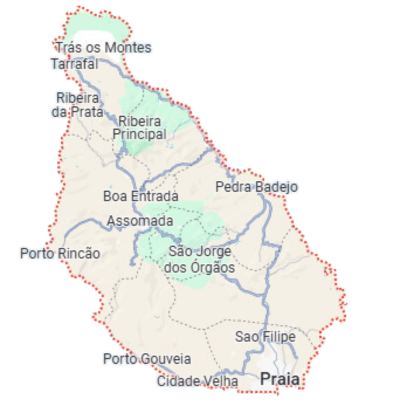
Plan three nights on Santiago, the most populous island: more than half of Cape Verdeans live there. Praia, the capital, welcomes you with the Sucupira market, rich in fresh produce and African fabrics. Nearby, Cidade Velha, a UNESCO World Heritage Site since 2009, was the first European colonial outpost in the tropics. You can follow the original street layout, two churches, a royal fortress and the Pelourinho square, a reminder of the history of slavery. In the north, the Serra Malagueta natural park, established in 2005, peaks at 1,064 meters and has 124 plant species, 14 of which exist nowhere else.

Fogo takes the remaining four nights; reach it preferably by plane, as sea links to the island are often disrupted. São Filipe, the main town, has kept its two-story colonial houses and its lively market. The main draw is Pico do Fogo, the highest peak in the country at 2,829 meters. The volcano erupted in November 2014: lava flowed for 77 days and buried much of Chã das Caldeiras, a village inside the crater, now repopulated by about 500 residents. The climb requires good fitness, good tolerance of heat and an experienced guide. Designated a biosphere reserve since 2020, the island is explored with residents who know the terrain well. Our page things to do in Fogo details the options.
You can book the Pico do Fogo climb with a guide as soon as your flight dates are set.
What to Keep in Mind Before Booking
Cape Verde is a country where crime remains low, but pickpocketing and bag snatching occur mainly in Praia, Sal and Boa Vista. In practice, leave your papers at the hotel and carry only what you need when you’re out in town.
The sea calls for more caution than the street. Currents can be strong: swim at lifeguarded beaches and respect the flags. From December to February, the bruma seca, a dusty haze blowing in from the desert, can disrupt flights, especially in Boa Vista; leave a margin before your return flight. To choose the month that suits you best, see our guide to the best time to go.
Finally, if you have ten days rather than seven, adding a third island becomes reasonable: we detailed three itineraries in what to do in Cape Verde in 10 days. To hand the whole plan to someone who knows the ground, you can also describe your project to the local agency.
Frequently Asked Questions
Which is better, Sal or Boa Vista?
Sal is livelier, with Santa Maria, its bars, kitesurfing, diving and the Pedra de Lume salt pans. Boa Vista is flatter and quieter, with its dunes, long beaches and turtles. If you want action, choose Sal; for calm, choose Boa Vista; and in one week, the two combine very well.
Can you see three islands in seven days?
It’s possible on paper, but each inter-island transfer takes half a day including transport, which leaves little time on site. Two islands make for a smoother week. With ten days, a third island becomes reasonable.
Sources
- Cape Verde AOC certification: new inter-island flights begin operations (CVsky, 17/02/2026) (accessed 2026-11)
- Cidade Velha inscribed on the World Heritage List (UNESCO, 2009) (accessed 2026-11)
- Cap-Vert, travel advice (French Ministry of Europe and Foreign Affairs) (accessed 2026-11)
- Cape Verde: entry requirements (GOV.UK) (accessed 2026-11)
- Cape Verde: safety and security (GOV.UK) (accessed 2026-11)
- Visa and airport tax (Cabo Verde, capeverde.com) (accessed 2026-11)
- Heart of fire: Chã das Caldeiras, Fogo (UNDP, GEF Small Grants Programme) (accessed 2026-11)
- Cabo Verde landmark attractions (Outlook Travel Magazine) (accessed 2026-11)
- 10 of the best things to do in Cape Verde (Hand Luggage Only) (accessed 2026-11)
- Cape Verde: things to do (World Travel Guide) (accessed 2026-11)
- Santo Antão, Cape Verde (Wikipedia) (accessed 2026-11)
- Boa Vista, Cape Verde (Wikipedia) (accessed 2026-11)
- Mindelo (Wikipedia) (accessed 2026-11)
Are you planning a trip to Cape Verde?
To organize your stay, we work with a local agency based in Cape Verde, which knows the archipelago island by island. Tailor-made tours, accommodation, inter-island flights, excursions: describe your project, we put you in touch and the agency prepares a proposal tailored to your wishes and budget.

Written by Adilson Gomes Garcia
Founder of Casa di CV and Gomia-Voyage, I was born in Santiago and I am committed to showcasing African territories, starting with Cape Verde. Through my platforms, I help travelers and curious minds better understand these destinations, their cultures and their realities, so they can plan authentic and respectful trips. My goal: to offer a clear, local and useful perspective for discovering Africa as it really is, with its riches and its identity.