
 Français
 Español
 Italiano
 Deutsch
 Português
 Русский
 Nederlands
 English
Contents
Cape Verde can be visited all year round, but not in the same way. For most travelers, the best period runs from November to June, with almost guaranteed sunshine and little rain. Whether you dream of beaches, mountain trails, turtles or carnival, one particular month may suit you better than the others.
The simplest approach is to start with what you want to experience, then check the right month in the seasons table below.
In Brief
- Dry season from November to June: clear skies, very little rain, about 25 to 30 °C during the day and 19 to 22 °C at night. This is the safe choice.
- Rainy season from mid-July to mid-October: hotter and more humid, with brief showers mainly on the mountainous islands, but green landscapes and prices that are often lower.
- December to March: strong trade winds on Sal, Boa Vista and São Vicente, ideal for wind sports but less so for a beach without any breeze.
- December to February: the dry haze (bruma seca) blowing in from the Sahara can reduce visibility and disrupt flights.
- Loggerhead turtles from June to October, humpback whales from February to May with a peak in March and April, Mindelo carnival on February 9, 2027.
- May and June are a very good compromise: pleasant sea, calmer winds, no rainy season yet.
Planning a trip to Cape Verde?
Tell us about your project: we will connect you with a local agency that knows every island and will prepare a proposal tailored to your interests and budget.
Tell us your dates and what you want to experience, and the local agency will reply with a proposal.
The Two Seasons, Simply Explained
The archipelago has a dry, tropical climate: the Atlantic keeps it cool, the trade winds blow almost all year, and sunshine is the norm. The rainy season runs from mid-July to mid-October, and the dry season from November to June. Even in the middle of summer, Sal remains the driest island in the archipelago.
| Period | What you will find | Best for |
|---|---|---|
| November to February | Sunshine, 25 to 29 °C during the day and around 20 °C at night, strong trade winds, cool nights at altitude | Hiking, kitesurfing and windsurfing, winter getaway |
| March to June | Warmer, wind dies down, pleasant sea, whales and then the first turtles | Beach, snorkeling, families |
| July to October | Often close to 30 °C, humidity, brief showers, green landscapes, turtle nesting | Nature, off-season travel, tight budgets |

These ranges are rough guides: Sal, a flat and arid island, stays very dry all year, whereas Santiago or Santo Antão, which are higher, catch most of the showers. For a specific month, island by island, our Cape Verde weather page goes into more detail, and the local agency can check with you which month fits your dates.
Wind and Dry Haze: The Two Things to Know
From December to March, the trade winds strengthen on the northeastern islands. On the beaches of Santa Maria or Sal Rei, this is pleasantly refreshing, but you may sometimes need to find a sheltered spot to lie down. Kitesurfers, on the other hand, find their season here.
Between December and February, Saharan dust can also veil the sky for a few days: this is the bruma seca, a dry haze that can sometimes turn into a sandstorm. In practice, an inter-island flight may be delayed or cancelled, so do not book your inter-island flight on the same day as your international return. Nothing dramatic, though, and most trips are not affected at all. For safety in general, see our page on tourism and risks in Cape Verde.
Choosing Your Month Based on What You Want
Hiking: November to February, or the end of the rains for green scenery
The trails of Santo Antão, Fogo and São Nicolau are dry, and the heat remains manageable in the dry season. After the rains, from September to November, the valleys are at their greenest, but some paths become slippery.

Beach and swimming: May and June, or almost all year on Sal and Boa Vista
The sea warms up gradually until autumn, and the wind drops in spring: May and June offer the best balance. If you are torn between the two main beach islands, our guide to choosing your island compares their atmospheres.
Turtles and whales: two distinct windows
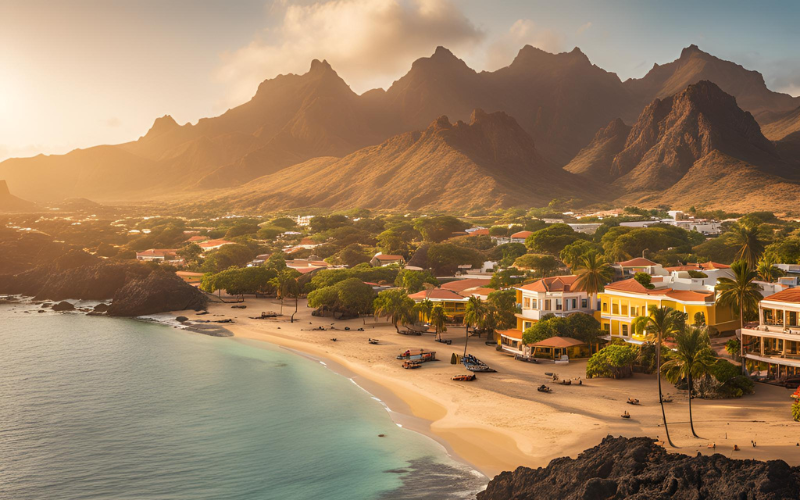
Loggerhead turtles nest from June to October on the beaches of Sal and Boa Vista, among the most important nesting sites in the world for this species. Night-time outings are made with licensed guides and should not be improvised. As for humpback whales, the season runs from February to May, with a peak in March and April around Boa Vista. In June, the two seasons barely overlap: the whales leave as the turtles arrive.
Culture and music: carnival in winter, Baía das Gatas in August
The Mindelo carnival, on São Vicente, reaches its height on Shrove Tuesday, which falls on February 9, 2027. Book your flight and accommodation very early, as rooms become scarce. The Baía das Gatas festival, which is free, was held from August 6 to 9 in 2026 for its 42nd edition. It takes place every year in August, on a date that varies: expect the first half of August in 2027, though no official date has been announced yet.
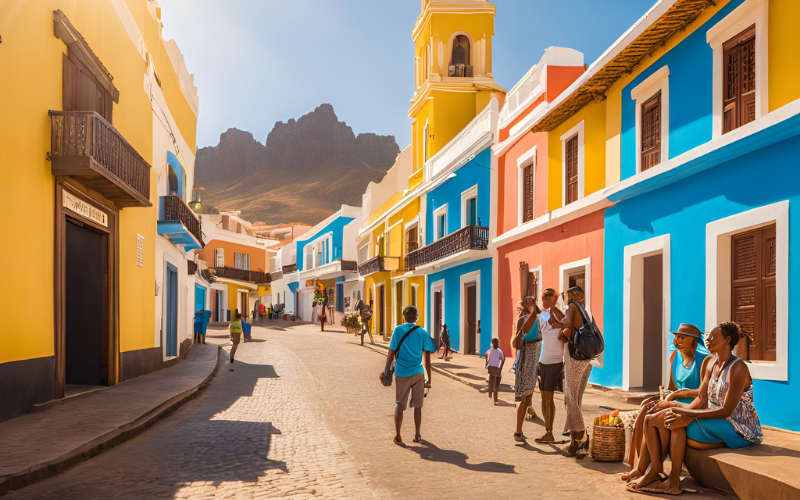
Ask the local agency for a trip timed around the Mindelo carnival.
Planning a trip to Cape Verde?
Tell us about your project: we will connect you with a local agency that knows every island and will prepare a proposal tailored to your interests and budget.
What This Means for Your Planning
When traveling with children, favor March to June: milder wind, pleasant sea, bearable heat. Our page traveling to Cape Verde with children covers the rest. As for packing, the season mainly changes the evening fleece and the rain jacket: see the packing checklist.
Finally, take French school holiday dates into account, as they push prices up from December to April. If your dates are flexible, ask the local agency for the most advantageous weeks around your project: this is where they can save you time and money.
Frequently Asked Questions
What is the weather like in Boa Vista in January?
January is dry and sunny, with strong trade winds that keep the air fresh. Expect pleasant but windy beach weather, much appreciated by kitesurfers. The dry haze (bruma seca) is still possible between December and February.
Is it safe to travel to Cape Verde?
Yes, with the usual precautions for any trip. Weather-wise, the main risks are the sometimes intense showers of the rainy season and the dry haze in winter. We detail practical advice in our page on tourism and risks.
What is the cheapest period?
The rainy season, from July to October, is generally the most affordable. Prices rise during French school holidays; the local agency can quote your exact dates.
Sources
- Belgian Federal Public Service Foreign Affairs: climate and disasters in Cabo Verde (updated 08/2025) (accessed 2026-11)
- Inforpress: Baía das Gatas, 42nd edition (30/07/2026) (accessed 2026-11)
- NASA Earth Observatory: Cape Verde Under Dust (accessed 2026-11)
- Wikipedia: climate of Sal, 1991-2020 normals from Amílcar Cabral airport (NOAA data) (accessed 2026-11)
- Wikipedia: climate of Praia, 1991-2020 normals from Nelson Mandela airport (NOAA data) (accessed 2026-11)
- Climate-Zone: temperature records, Amílcar Cabral airport station (Sal), NOAA data (accessed 2026-11)
- Wikipedia: Baía das Gatas Festival (accessed 2026-11)
- Figaro Nautisme: sea turtle season (06/2026) (accessed 2026-11)
- Breaking Travel News: 2024 nesting season (accessed 2026-11)
- Routard: Boa Vista, the island of dunes (accessed 2026-11)
- Selectour: when to go to Cape Verde (whales) (accessed 2026-11)
- Cruise Timetables: Mindelo, February 2027 (Shrove Tuesday February 9) (accessed 2026-11)
Are you planning a trip to Cape Verde?
To organize your stay, we work with a local agency based in Cape Verde, which knows the archipelago island by island. Tailor-made tours, accommodation, inter-island flights, excursions: describe your project, we put you in touch and the agency prepares a proposal tailored to your wishes and budget.

Written by Adilson Gomes Garcia
Founder of Casa di CV and Gomia-Voyage, I was born in Santiago and I am committed to showcasing African territories, starting with Cape Verde. Through my platforms, I help travelers and curious minds better understand these destinations, their cultures and their realities, so they can plan authentic and respectful trips. My goal: to offer a clear, local and useful perspective for discovering Africa as it really is, with its riches and its identity.