 Français
 Español
 Italiano
 Deutsch
 Português
 Русский
 Nederlands
 English
Contents
- At a glance
- What the risk means, island by island
- Which island to choose when travelling solo
- Accommodation: a detail that changes everything
- Getting around without a car
- Hiking and swimming: the real risks when alone
- Encounters and harassment: what to expect
- Health and insurance, without the drama
- Formalities and timing
- Travelling solo, or with a local agency?
- Frequently asked questions
- Sources
Yes, women can travel solo in Cape Verde, and many do so without any problems: the country is stable, the welcome is famously warm, and the tourist islands are used to visitors travelling alone. The risk is not zero, however, and it is not spread evenly across the islands. It mainly comes up at night, in the larger towns and on certain isolated trails, which is exactly where a few simple habits make all the difference.
Here is which islands to choose for a first solo trip, what the French and British authorities actually say, and how to organise accommodation, transport and hikes without spoiling your holiday.
At a glance
- For a first solo trip, Sal (Santa Maria) is the simplest island; São Vicente (Mindelo) is the best for meeting locals and for heading out to Santo Antão.
- The French authorities place the whole archipelago under heightened vigilance and report a rise in sexual assaults, mostly against solo female travellers; the British authorities describe such incidents as rare but reported. In both cases the advice is the same: no walking alone at night, and no deserted streets.
- Praia (Santiago) requires the most caution; Sal and Boa Vista mainly see bag snatching, and Mindelo calls for vigilance at night.
- Hiking on Fogo and Santiago, and dunes on Boa Vista: go with a local guide, as rescue services are very limited and there is no helicopter. On Santo Antão, take a guide for the high-altitude sections.
- Inter-island flights with CVsky, ferries with CV Interilhas; Santo Antão and Brava are only connected by boat.
- Before you leave: complete the EASE form at least 5 days before arrival and pay the 4,400 CVE (€39.90) TSA airport tax; visa-free stays are up to 30 days.
- Best time to visit: December to April, avoiding the rainy season from August to October.
Planning a trip to Cape Verde?
Tell us about your project: we will put you in touch with a local agency that knows every island and will prepare a proposal tailored to your preferences and budget.
What the risk means, island by island
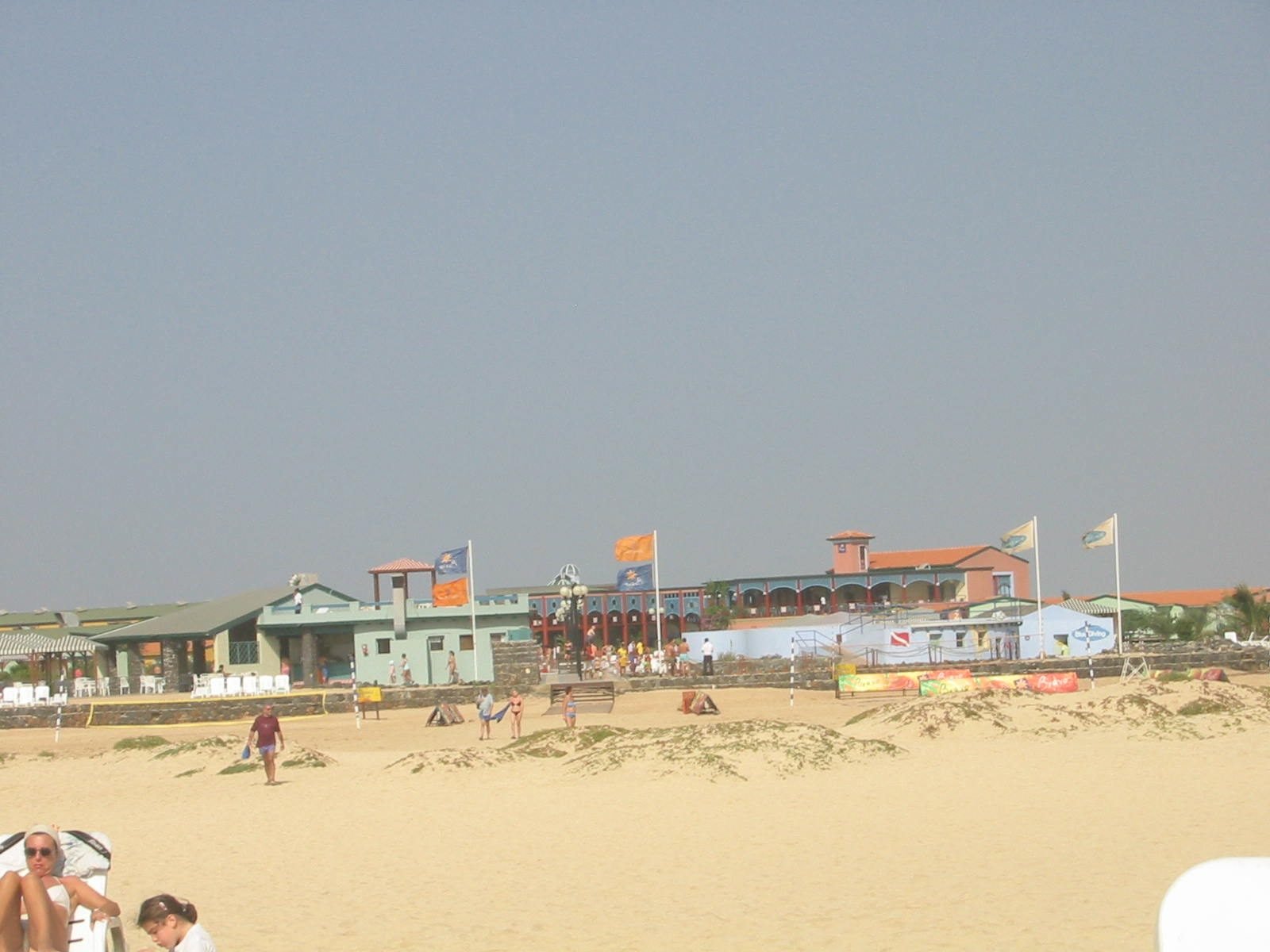
The first question many people ask is whether “Cape Verde” is safe, but the useful question is “safe where and at what time?” Official advice paints a fairly clear picture. Bag snatching and burglary mainly affect Praia, Sal and Boa Vista, often in tourist areas and even during the day; gold jewellery and phones are the usual targets. More serious assaults are concentrated in Praia and on certain trails in Santiago, Boa Vista and Fogo. Belgium, for its part, notes a slight deterioration in recent years in Praia, Mindelo, Boa Vista and Sal.
For a woman travelling alone, one point deserves to be stated plainly: the French authorities say sexual assaults have increased and that solo female travellers are the main victims, while the British authorities describe them as “rare but reported”. In practical terms, this is not a reason to cancel or to downplay the risk, but a reason to avoid finding yourself alone at night in an empty place with no passers-by, which is precisely what the advice below helps you avoid.
| Island | What happens | Your reflex |
|---|---|---|
| Sal and Boa Vista | ||
| Sal (Santa Maria) | Bag snatching, burglaries; verbal remarks reported by female travellers | Use your accommodation’s safe, official taxis (blue and yellow), firm and calm refusal |
| Boa Vista | Same kind of theft; assaults reported away from the centres; sandstorms from December to February | Dunes and tracks with a guide; no walking alone outside town |
| São Vicente, Santo Antão, Fogo | ||
| São Vicente (Mindelo) | Be vigilant at night, away from the busy streets of the centre | Take a taxi back after dark |
| Santo Antão | Little crime reported; the real issue is walking (fog, slippery paths) | Guide or an easy route, never at night |
| Fogo | Assaults reported on certain trails; occasional tremors; sea crossings often disrupted | Guide for Pico, with a fallback route planned |
| Santiago | ||
| Praia | Armed assaults rising according to the French authorities; theft both by day and by night | Don’t walk outside busy areas, take a taxi in the evening, keep your stay short |
One piece of advice applies on every island: if someone tries to snatch a bag or a phone, don’t resist, as belongings can be replaced. Thieves mainly target pedestrians, so carry a discreet bag rather than a bum bag, leave your passport and tickets in the accommodation’s safe with a copy on your phone, and carry little cash.
Which island to choose when travelling solo
Choosing your island means choosing the kind of solitude you want: that of a beach where nobody talks to you, or that of a town where you are invited to join the next table. To compare the archipelago in more detail, our guide to choosing your island goes further; here is the “solo female traveller” angle.
| What you’re looking for | Island | Why |
|---|---|---|
| A worry-free first trip | Sal | Everything is within walking distance around Santa Maria, direct flights from France, many solo travellers; the hotel-resort side can feel repetitive |
| Encounters, music, city life | São Vicente | Mindelo is the most culturally lively town, with its music nights and its carnival in February |
| Hiking and landscapes | Santo Antão | Magnificent trails, reachable by ferry from Mindelo (operators CV Interilhas and Nôs Ferry); book a guide for the high-altitude sections |
| Calm and beaches | Boa Vista | Guaranteed relaxation, but few activities and encounters if you don’t have a car |
| Volcano and authenticity | Fogo | Climbing Pico requires good fitness and a guide; allow 3 to 4 days |
For 10 to 14 days, two or three islands is enough: any more and you’ll spend your time on the quayside. If planning the route feels daunting, you can also ask our partner local agency to suggest an itinerary for a solo traveller.
Accommodation: a detail that changes everything
For a solo traveller, a guesthouse or a small hotel is often the best choice: you see the host every morning, they can recommend a trusted taxi driver, and you can leave your belongings in a safe. Female travellers advise booking a room on an intermediate floor near reception, rather than at the end of a corridor or on the ground floor by the garden. In terms of budget, solo travellers’ accounts mention roughly €20 to €40 a night for a decent guesthouse. One of them, who travelled in January 2026 for 14 days including flights, reports spending about €1,170 in total and finding accommodation expensive for one person. These are personal accounts, not official prices, and rates vary a lot by season and island.
Youth hostels are rare outside Mindelo and Sal. If you want company without actively seeking it, these two towns are therefore the easiest. To book accommodation that suits your profile, our partner local agency can point you in the right direction on Sal or São Vicente.
Getting around without a car
Inter-island flights are operated by CVsky since 29 March 2026, with routes between Sal, Praia, São Vicente, Boa Vista, São Nicolau, Maio and Fogo. Ferries are run by CV Interilhas, and the Mindelo–Porto Novo crossing to Santo Antão is also served by Nôs Ferry. The islands of Santo Antão and Brava have no operational airport: the boat is the only way there. Wind can cancel a crossing with no alternative, as a solo traveller recounted in January 2026, so allow a day’s margin before a return flight.
On the ground, there is no intercity bus network: aluguers, shared minibuses, fill that role. They leave when full and put you in contact with locals. They are slow but very cheap. In the evening, take an official taxi or the one your accommodation calls, and agree on the fare before getting in. The French authorities note that these shared taxis sometimes drive dangerously, and that dirt tracks become difficult in the rainy season. If you rent a car, insurance is recommended, as there is no roadside assistance.
Hiking and swimming: the real risks when alone
Activities, more than the towns, are often what puts a solo female traveller at risk. There is no helicopter in Cape Verde: in the event of a fall on Pico do Fogo or in a valley on Santo Antão, evacuation can take a very long time. This is why the authorities advise a Cape Verdean guide for mountain and dune excursions in Santiago, Fogo and Boa Vista. In travellers’ accounts, the danger comes less from strangers than from fog, slippery paths and GPS signals that drop out, particularly on Santo Antão.
The same caution applies to the sea. Swimming is generally not supervised, currents are strong, and there is no sea rescue service. Swim on a beach with a lifeguard when there is one, obey the flags (red: no swimming, yellow: you may wade but not swim, green: swimming permitted), and avoid the dams and reservoirs in Santiago because of schistosomiasis (bilharzia).
Encounters and harassment: what to expect
In tourist areas, female travellers mostly describe genuine hospitality, the famous morabeza. Verbal remarks do happen, particularly in Mindelo and Santa Maria; a calm, clear refusal is enough in the vast majority of cases, and setting your limits from the first exchange avoids misunderstandings. As one traveller summed it up: it is a safe country, but not one free of sexist behaviour.
You will often be offered help or a cup of tea. Accept in a public place during daylight, and do not let yourself be taken to an isolated spot by someone you have just met. In villages and in the mountains, more modest clothing (covering knees and shoulders) is better received than beachwear. A few words of Portuguese or Creole are appreciated, and you can get by in French in hotels on the tourist islands. Let someone at home know your itinerary and keep your phone charged with a power bank. Our eSIM comparison saves you from looking for a SIM card on arrival.
In case of trouble, the police can be reached on 132, the hospital on 130 and the fire service on 131. The French embassy in Praia can only issue an emergency travel document if your passport is lost, and its crisis assistance is limited: you are your own first resource. For an overview of safety, our page on tourism and dangers in Cape Verde complements this one.
Health and insurance, without the drama
Medical care is limited, especially on Boa Vista, and a serious emergency is hard to manage on Brava and Santo Antão, given the lack of an operational airport: the largest hospitals are in Praia and Mindelo. Insurance covering medical costs and repatriation is essential, as the embassy will not pay anything. Dengue circulates, mainly on Santiago, Fogo and Brava, and malaria is rare and limited to Santiago: protection against mosquitoes is sufficient in most cases. For vaccinations and water, our article on health precautions details what to prepare. Drink bottled water and keep your medication in its original packaging with the prescription.
Formalities and timing
The EASE form (ease.gov.cv) must be completed at least 5 days before arrival; the TSA airport tax of 4,400 CVE (€39.90), in force since 4 November 2026, is paid at that time. Children aged one year and under need neither to complete the form nor to pay the TSA. Without pre-registration, the amount is doubled at the border. Your stay can last 30 days without a visa. Your passport must be valid for at least three months after the end of your stay. As for timing, December to April is dry and sunny, but the sandy harmattan wind can disrupt flights from mid-December to late March; see our calendar to help you choose the right month.
Planning a trip to Cape Verde?
Tell us about your project: we will put you in touch with a local agency that knows every island and will prepare a proposal tailored to your preferences and budget.
Travelling solo, or with a local agency?
You can organise everything yourself, and that is what most solo female travellers do. An agency is most useful for the technical parts: night transfers, the ascent of Fogo, hikes on Santo Antão, back-to-back ferry journeys. Our comparison organised tour or independent travel covers the cases in detail. In short, combine both: book your accommodation and flights yourself, and leave the higher-risk legs to a guide. For this second part, describe your project to the local agency, which will reply with a tailored proposal.
Frequently asked questions
Is it dangerous to travel alone in Cape Verde?
Not overall, but the risk is uneven. Bag snatching is common in Praia, Sal and Boa Vista, and the French authorities report a rise in sexual assaults, mainly targeting solo female travellers. By avoiding walking at night and isolated places, most trips go smoothly.
Which island should I choose for a first solo trip?
Sal for its simplicity, São Vicente (Mindelo) for meeting people and music, with Santo Antão as a day trip for hiking. Praia requires the most vigilance.
Do people speak French in Cape Verde?
In hotels on the tourist islands, you can often get by in French. Elsewhere, a few words of Portuguese or Creole go a long way and are very much appreciated.
What budget do I need to travel alone in Cape Verde?
Solo travellers’ accounts give very different orders of magnitude: a 14-day trip including flights came to about €1,170 in January 2026, with accommodation judged expensive for one person. The 4,400 CVE (€39.90) TSA is on top of that.
Do I need a guide to hike alone?
Yes for Pico do Fogo and for the dunes or mountains of Santiago and Boa Vista, according to the French authorities. On Santo Antão, a guide is recommended for high-altitude sections or in poor visibility.
Sources
- France Diplomatie: Cape Verde, safety (accessed 2026-11)
- France Diplomatie: Cape Verde, health (accessed 2026-11)
- France Diplomatie: Cape Verde, entry and stay (accessed 2026-11)
- France Diplomatie: Cape Verde, useful information (accessed 2026-11)
- GOV.UK: Cape Verde, safety and security (accessed 2026-11)
- GOV.UK: Cape Verde, entry requirements (accessed 2026-11)
- GOV.UK: Cape Verde, health (accessed 2026-11)
- Cape Verde Tourism: ferries (accessed 2026-11)
- The Traveler: CVsky, inter-island flights (accessed 2026-11)
- 4stogo: TSA at 4,400 CVE from 4 November 2026 (accessed 2026-11)
- Belgian Diplomacy: general security in Cabo Verde (accessed 2026-11)
- La Drôme Montagne: travelling solo in Cape Verde (first-hand account) (accessed 2026-11)
- Génération Voyage: Cape Verde solo (first-hand account) (accessed 2026-11)
- Routard forum: travelling solo in Cape Verde (accessed 2026-11)
- Routard forum: solo woman in Cape Verde (accessed 2026-11)
- Routard forum: Santo Antão and São Vicente account, January 2026 (accessed 2026-11)
Is your trip taking shape?
The local agency takes care of your stay, transfers and trips. Free request, no obligation.

Written by Adilson Gomes Garcia
Founder of Casa di CV and Gomia-Voyage, I was born in Santiago and I am committed to showcasing African territories, starting with Cape Verde. Through my platforms, I help travelers and curious minds better understand these destinations, their cultures and their realities, so they can plan authentic and respectful trips. My goal: to offer a clear, local and useful perspective for discovering Africa as it really is, with its riches and its identity.