 Français
 Español
 Italiano
 Deutsch
 Português
 Русский
 Nederlands
 English

Contents
Before discovering the enchanting landscapes of Cape Verde, it is essential to think about your health. Vaccines, health precautions, tropical risks: it is better to anticipate to travel with peace of mind.
On our guide to organizing a stay in Cape Verde with complete peace of mind, find everything you need to know to prepare for your departure safely.
Planning a trip to Cape Verde?
To organize your stay, we work with a local agency based in Cape Verde, which knows the archipelago island by island. Customized tours, accommodations, inter-island flights, excursions: describe your project, we will connect you, and the agency will prepare a proposal tailored to your desires and budget.
Recommended vaccinations before a trip to Cape Verde
Before leaving to explore the Cape Verdean islands, it is important to check that your vaccinations are up to date. Even though Cape Verde does not present major health risks, certain precautions are strongly advised to avoid inconveniences during your stay.
Mandatory vaccinations
No vaccine is officially required for travelers arriving from Europe. However, if you come from a country affected by yellow fever (such as some countries in Africa or South America), you will need to present a vaccination certificate against this disease to enter Cape Verde.
This case remains rare, but it is better to be aware of it if you regularly travel to tropical areas.
Recommended vaccinations
For a typical tourist stay, several vaccines are recommended by health authorities, including:
- Updating the DTaP vaccine (diphtheria, tetanus, whooping cough, poliomyelitis)
- Hepatitis A, transmitted through contaminated water or food
- Typhoid, especially if you plan to stay for a long time or in rural areas
These vaccines help limit the risks associated with food or hygiene conditions that differ from those known in Europe.
Additional vaccines based on individual conditions
In certain specific cases, additional vaccines may be considered:
- Hepatitis B, if you plan a prolonged stay or close contact with the local population
- Rabies, for adventurous travelers, isolated hikers, or volunteers on the ground
- Meningococcal meningitis, rarely necessary but possible in case of an outbreak or prolonged stays in community settings
Before your departure, it is recommended to consult a doctor or an international vaccination center. A professional will be able to tailor their advice to your health status, the duration of your stay, and the planned activities on site.
Specific health risks in Cape Verde
Even though Cape Verde is a safe destination in terms of health, some risks exist, particularly related to the tropical climate, water, food, and insect bites. Here are the points to know to anticipate and avoid health issues during your stay.
Diseases transmitted by mosquitoes
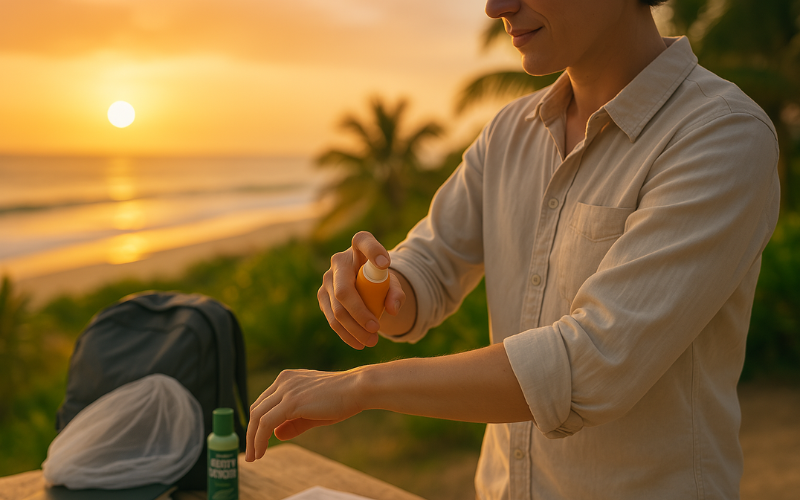
Malaria has been officially eradicated on the majority of the Cape Verde islands, but it has been sporadically reported in Santiago and Boa Vista. No antimalarial treatment is required for travelers, but protection against mosquitoes remains essential.
Use appropriate skin repellents, sleep under a mosquito net if necessary, and wear long clothing in the evening, especially in humid areas.
Risks related to water, food, and drinking water
As in many countries, tap water in Cape Verde is mainly suitable for locals who are accustomed to it. Therefore, it is recommended to opt for sealed bottled water to avoid any discomfort. It is best to avoid ice cubes, unwashed fruits, and raw products offered in small shops or markets.
Digestive issues like traveler’s diarrhea are the most common inconveniences. Bring rehydration tablets, an intestinal antiseptic, and do not hesitate to adopt a light diet in the first few days.
Other environmental risks
The dry and windy climate of Cape Verde can cause skin irritations, dehydration, or sunburn. Remember to protect yourself with a high SPF sunscreen, wear a hat, and drink regularly.
For hiking enthusiasts, the paths can be rocky or slippery, especially on islands like Santo Antão. A good pair of shoes and a lightweight first aid kit are your best allies.
Health precaution advice to follow on site

Once on site, a few simple gestures allow you to enjoy your stay in Cape Verde while limiting health risks. Here are the good practices to adopt on a daily basis.
Food hygiene
Favor well-cooked and hot-served foods, especially in small restaurants or street markets. Avoid unwashed raw vegetables, raw seafood, and unpasteurized dairy products.
Wash your hands regularly, or use hand sanitizer, especially before meals. These simple reflexes will help you avoid digestive issues, which are common among travelers.
Protection against insect bites
Even though the risk of malaria is low, other diseases like dengue can be transmitted by mosquitoes. Protect yourself by applying an appropriate repellent, wearing long clothing, and sleeping under a mosquito net if needed.
Ideally, avoid marshy areas at dawn and dusk, times when mosquitoes are most active.
Awareness of temperature and climate
The Cape Verdean climate is dry, windy, and sunny. To avoid heat strokes or dehydration, drink water regularly, even without feeling thirsty, and limit physical exertion during the hottest hours.
Protect your skin with high-protection sunscreen and plan for light, breathable, and covering clothing.
Summary and final health advice for a trip to Cape Verde
A few precautions are enough to travel peacefully in Cape Verde: an up-to-date passport, recommended vaccinations, good hygiene on-site, and special attention to the climate. Nothing too demanding, but essential to fully enjoy your stay.
On Casa di CV, we help you prepare every aspect of your trip, including health, so you can explore the archipelago with peace of mind, from the first day until your return.
Are you planning a trip to Cape Verde?
To organize your stay, we work with a local agency based in Cape Verde, which knows the archipelago island by island. Tailor-made tours, accommodation, inter-island flights, excursions: describe your project, we put you in touch and the agency prepares a proposal tailored to your wishes and budget.

Written by Adilson Gomes Garcia
Founder of Casa di CV and Gomia-Voyage, I was born in Santiago and I am committed to showcasing African territories, starting with Cape Verde. Through my platforms, I help travelers and curious minds better understand these destinations, their cultures and their realities, so they can plan authentic and respectful trips. My goal: to offer a clear, local and useful perspective for discovering Africa as it really is, with its riches and its identity.