
 Français
 Español
 Italiano
 Deutsch
 Português
 Русский
 Nederlands
 English

Contents
Are you dreaming of escaping to a tropical paradise that is still unspoiled? Discover how to organize your trip to Cape Verde easily and effectively with this practical guide. Whether it's to enjoy the golden sandy beaches of Boa Vista, explore the spectacular mountains of Santo Antão, or immerse yourself in Cape Verdean culture in São Vicente, this guide will accompany you step by step to ensure your stay is unforgettable.
In this article, we will explain everything you need to know to organize your stay in Cape Verde: from administrative formalities, to transport between the islands, including the best accommodations and the must-see activities. Get ready to experience the essence of
Need help planning your trip to Cape Verde?
Casa di CV connects you with a local agency specializing in Cape Verde, which organizes your stay from the itinerary to the choice of islands, for a peaceful trip, tailored to your pace and desires.
Introduction to Cape Verde

Overview of the main islands
Cape Verde is an enchanting archipelago nestled in the heart of the Atlantic, consisting of ten distinct islands, each offering a diversity of landscapes and cultures that promise to captivate all travelers.
The island of Sal, with its vast white sandy beaches and diving spots, particularly attracts those in search of sun and crystal-clear sea.
In contrast, the island of Santo Antão is a true paradise for hiking enthusiasts, with its steep mountains and lush valleys offering breathtaking views.
These islands are just a few examples of what awaits you in Cape Verde, a place where each island tells its own story and offers its own experience.
Climate and best time to travel
Planning your trip to Cape Verde requires an understanding of the tropical climate of the archipelago, characterized by two main seasons. The dry season, which runs from November to June, is ideal for exploring the islands.
The months from February to June are often considered the best for visiting, as they offer mild and sunny weather, perfect for outdoor activities like hiking or kitesurfing.
In contrast, the rainy season, which lasts from August to October, although wetter, also has its charms. The landscapes are adorned with lush vegetation, and it is a good time to discover the greener aspect of the islands, particularly on the island of Santiago.
This climatic diversity contributes to the charm of Cape Verde, allowing each traveler to find the island and season that perfectly match their desires for adventure or relaxation.
Preparing for the trip

Administrative formalities and visa
Traveling to Cape Verde starts with good administrative preparation, especially for travelers coming from France.
To enter the archipelago, a visa is required, but the good news is that you can obtain an electronic visa (e-visa) before departure, which greatly simplifies the formalities.
We recommend applying online via the official site https://www.ease.gov.cv, to avoid long queues at the airport.
The cost of the visa is about €31, and it is advisable to apply at least 5 days before your departure. For French travelers, this option is highly recommended, as it will save you time upon arrival.
Make sure that your passport is valid for at least six months after your return.
By taking care of these formalities before your trip, you can start your stay in Cape Verde in a calm manner, ready to enjoy the adventure that awaits you.
Vaccinations and health advice
Health is paramount when traveling. Before flying to Cape Verde, pay attention to the health recommendations. No vaccination is mandatory, but some are recommended, such as those against hepatitis A and B.
Bring a first aid kit containing sunscreen, insect repellent, and motion sickness medication if you plan to navigate between the islands.
Drinking bottled water to avoid gastric discomfort can also be a wise precaution.
Travel insurance
Travel insurance is a valuable assistance for traveling with peace of mind. Although far from mandatory, it remains an interesting option as it provides coverage in case of cancellation, lost luggage, or unexpected medical expenses.
It would be good to check that your policy includes the activities you plan to undertake, such as scuba diving.
Protecting against eventualities contributes to a hassle-free stay, saving you many financial and logistical worries. You can thus focus on discovering the unique culture and the morabeza, this concept of hospitality so typical of Cape Verde, in complete tranquility.
With all these formalities in place, you are sure to fully enjoy Cape Verde, from its postcard-worthy beaches to the steep peaks of the island of Santo Antão.
The meticulous organization of your trip to Cape Verde is the key to experiencing an unforgettable adventure, from the warm welcome of the locals to the richness of the landscapes. Get ready to be surprised at every turn by this enchanting archipelago and its hidden treasures.
Transport

When planning your trip to Cape Verde, the aspect of transport is crucial to ensure that each step of the journey goes smoothly.
The transport network is well established and offers several practical means of getting around, both internationally and internally.
International flights and airports
Getting to Cape Verde is simpler than one might think, thanks to several international and local airlines. Cabo Verde Airlines, for example, offers regular flights from Europe and Africa.
The main international airports such as Nelson Mandela Airport on the island of Santiago, Amílcar Cabral Airport on the island of Sal, and Aristides Pereira Airport on the island of Boa Vista, are key entry points. To reduce costs, it may be interesting to compare the prices of direct flights and those with stopovers.
Inter-island travel
Once you arrive in Cape Verde, getting around between the different islands is essential to discover the full diversity of the landscapes and cultures of the archipelago. There are two main means of transport for traveling from island to island: domestic flights and ferries.
Domestic Flights :
Domestic flights are the ideal solution for those who want to travel quickly between the islands.
The national airline operates regular connections between the main islands, making travel easier. Here are the main available flight connections:
- Island of Sal (SID) :
- Sal → Boa Vista : 20 minutes
- Sal → Santiago : 45 minutes
- Sal → São Vicente : 45 minutes
- Sal → São Nicolau : 40 minutes
- Island of Boa Vista (BVC) :
- Boa Vista → Sal : 20 minutes
- Boa Vista → Santiago : 50 minutes
- Island of Santiago (RAI) :
- Santiago → Boa Vista : 50 minutes
- Santiago → Fogo : 30 minutes
- Santiago → Maio : 20 minutes
- Santiago → Sal : 45 minutes
- Santiago → São Vicente : 50 minutes
- Island of Fogo (SFL) :
- Fogo → Santiago : 30 minutes
- Island of Maio (MMO) :
- Maio → Santiago : 20 minutes
- Island of São Nicolau (SNE) :
- São Nicolau → Sal : 40 minutes
- São Nicolau → São Vicente : 30 minutes
- Island of São Vicente (VXE) :
- São Vicente → Sal : 45 minutes
Ferries :
The ferries in Cape Verde are a more economical option and offer a great opportunity to enjoy the marine landscapes and the Atlantic Ocean. Here are the main ferry connections between the islands of Cape Verde:
- São Vicente → Santo Antão : 1 hour
- Santiago → Fogo : 3 to 4 hours
- Santiago → Maio : 2 to 3 hours
- São Vicente → São Nicolau : 4 to 6 hours (depending on weather conditions)
Ferries often allow you to enjoy breathtaking views of the archipelago, but it is important to note that schedules may vary depending on sea conditions, so it is recommended to allow some flexibility in your planning.
To find updated schedules, you can check the website of CV Interilhas.
Practical tips :
- Book in advance : Whether you choose a flight or a ferry, it is advisable to book in advance, especially in high season, to avoid disappointment.
Choose the mode of transport that suits you best: domestic flights are ideal for saving time, while ferries offer both an enriching and economical experience, especially for short trips between São Vicente and Santo Antão.By following these recommendations, you will be able to organize your travel between the islands effectively and enjoy all the wonders of Cape Verde, whether exploring the landscapes of Santo Antão, the beaches of Boa Vista, or the cultural atmosphere of Mindelo.
Local transport: taxis and car rentals
To get around within the islands, shared taxis, called "aluguer", are an authentic experience that allows you to immerse yourself in the daily life of locals while visiting remote places. For more freedom, car rental is recommended, although one must be ready to embark on sometimes winding roads. Drivers will enjoy freely exploring the splendid beaches of the island of Boa Vista or the lush valleys of Santo Antão.
Accommodation

Traveling to Cape Verde offers a multitude of sensations, and choosing the right accommodation contributes to making the experience even more memorable.
Being an archipelago with varied landscapes, you will find a diversity of options suitable for all tastes and budgets. Here are some tips to guide you in your choice so that you can fully enjoy your trip to Cape Verde.
Types of accommodation available
In Cape Verde, you have a wide choice between hotels, apartments, hostels, and traditional guesthouses.
For luxury enthusiasts, the all-inclusive resorts on Sal Island and Boa Vista Island offer exceptional services with panoramic views of the ocean.
If you are looking for a cultural immersion, opt for a "pensão" or a "residencial" on the island of Santo Antão where the famous morabeza will surround you with warm hospitality.
The hostels and campgrounds are perfect for adventurers who want to travel economically, especially in Praia or Mindelo.Many of these places offer not only affordable accommodation but also opportunities to meet other travelers and exchange travel tips.
Tips for choosing your accommodation
For your Cape Verde itinerary, consider booking your accommodation in advance, especially if you plan to travel during peak seasons like Christmas or summer, when tourist crowds reach their peak.
Using online booking platforms like Trip.com can make this process easier, while giving you access to valuable studies and reviews from other travelers.
It is also wise to check the transport options nearby your accommodation to maximize your experience of inter-island travel.Hotels close to the ports or airports not only save you time but also reduce transportation costs.
Finally, a practical tip: check the plans of your accommodation to verify the internet connection if that is essential for you, as some areas, especially the more remote ones, may have limited reception.Otherwise, you can simply enjoy your stay to completely disconnect.
By paying attention to these details, you are sure to have an unforgettable experience, whether you are there for a few days of water sports, unexplored hiking, or a complete immersion in Cape Verdean lifestyle.Activities to do in Cape Verde
Hiking and outdoor activities
Cape Verde, a true land of contrasts, is wonderfully suited for outdoor activities.
Start your adventure on Santo Antão Island, known for its spectacular hiking trails. Imagine winding through lush valleys, with steep mountains on your immediate horizon.
Hiking enthusiasts will not be able to resist the ascent of Pico da Cruz for a panoramic view of the entire island.
For those who prefer a more serene atmosphere, the plateau of Cova promises total immersion in postcard-worthy landscapes.
Beaches and water sportsAfter the effort, nothing beats relaxing on the idyllic beaches of Cape Verde. Sal Island is a must for sunbathers with its kilometers of fine sand.
For the more athletic, the beaches of Boa Vista invite you to practice kitesurfing and windsurfing, thanks to their perfect windy conditions.
Discovering local culture
A trip to Cape Verde would not be complete without a cultural immersion. Let yourself be enchanted by the rhythms of the morna, the traditional music immortalized by the famous singer Césaria Évora.
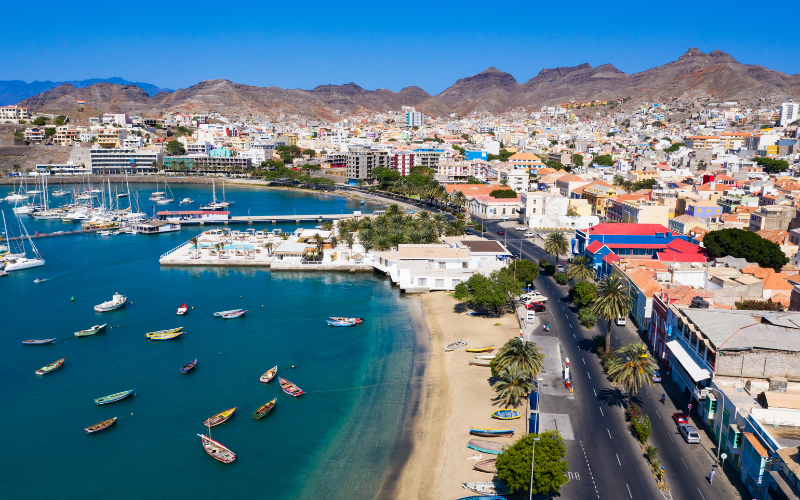
For a daily dose of culture, stroll through the cobbled streets of Mindelo, on the island of São Vicente, where colonial architecture tells the tumultuous history of the archipelago.
Gastronomy
Where to eat: restaurants and markets
For a true glimpse of the culinary culture of Cape Verde, dive into the lively atmosphere of the local markets, where stalls overflow with tropical fruits, fresh fish, and exotic spices.
Markets like the one in Mindelo on the island of São Vicente promise a culinary journey at the heart of tradition.
For a more refined dining experience, the restaurants on Sal Island or Boa Vista offer plenty of options.Opt for a seaside dinner where the grilled fish, freshly caught, is enhanced by local herbs.
Many of these establishments are committed to sustainable tourism, highlighting local and eco-friendly products.
Budget and costsPlanning a trip to Cape Verde requires looking into the various expenses to anticipate.
The archipelago, while being a relatively affordable destination, can present budget surprises. Here’s how to navigate through the costs and prepare a budget for a trip to Cape Verde without unpleasant surprises.
Planning the overall budget
The budget for a trip to Cape Verde depends on several key factors: the duration of the stay, the type of comfort sought, and the planned activities.
For a typical two-week stay, it is reasonable to budget between 1000 and 2000 euros per person, an amount that covers transportation, accommodation, meals, and leisure.
For travelers who prioritize comfort and luxury, the budget can easily rise to 3000 euros or more.
International flights, often with Cabo Verde Airlines or European airlines, represent a significant part of the expenses.
By booking in advance, it is possible to find interesting prices, often attractive during the low season which runs from May to October.Tips for saving
Traveling smart and economically is possible by applying a few tricks. Consider:
- Avoid the high tourist season when accommodation and flight prices are at their highest.
- Use small family hotels or local hostels, which are more economical than large international hotels.
- Travel between the islands by ferries, which are cheaper than domestic flights, unless time is a crucial factor.
- Favor Cape Verdean cuisine in local restaurants or at markets.
For those interested in ecotourism, know that several local initiatives offer authentic experiences at reasonable prices, while contributing to the sustainable development of the archipelago.
Many hikes on Santo Antão island, for example, offer total immersion in breathtaking landscapes with little cost.
Practical tips and tricks
Traveling to Cape Verde is an adventure to fully experience, with its beautiful landscapes and rich culture. To make your stay an unforgettable experience, a few tips and practical tricks can make all the difference.
Language and communication
Even though Portuguese is the official language, you will very often hear Cape Verdean Creole, reflecting the cultural diversity of the archipelago.
Don’t worry, in tourist areas, English and French are also understood.
To better immerse yourself, why not learn a few basic words in Creole? The locals will appreciate your effort and you will be surprised by the warmth of their morabeza, a legendary hospitality unique to Cape Verde.
A translation app on your phone can be very helpful for more complex discussions.
Safety and precautions
In general, Cape Verde is a safe destination, but like anywhere else, a minimum of vigilance is required.
Always keep an eye on your personal belongings, especially in large cities and during lively cultural events.
Avoid venturing off the beaten path at night, and prefer organized excursions, which are often accompanied by knowledgeable local guides.
Cultural adaptation
One of the pleasures of traveling is discovering new cultures. Respect local traditions for a more enriching experience.
For example, the pace of life in Cape Verde is relaxed – don’t be surprised if you wait a little (or a lot) longer for service.
Dress modestly when visiting religious sites and follow the locals' example during festivities to learn their traditional dances.
Traveling to Cape Verde is much more than just discovering landscapes; it’s an immersion into a unique and authentic culture.By following these tips and with a little preparation, your trip to Cape Verde will not only be a pleasure but also an enriching experience on all levels.
Are you ready to plan your trip to Cape Verde
There you go, you are now ready to embark on your adventure in Cape Verde with confidence and enthusiasm. Feel free to browse our articles to delve into other topics more deeply.
Don’t forget that the Cape Verde itinerary ideal is the one that resonates with your personal passions and curiosities.
Whether you choose the enchanted beaches or the rocky peaks for your explorations, the islands will charm you.
Finally, may your stay in Cape Verde be filled with memorable moments and may each encounter enrich your understanding of this fascinating country. Safe travels and wonderful amazement in Cape Verde!


Are you planning a trip to Cape Verde?
To organize your stay, we work with a local agency based in Cape Verde, which knows the archipelago island by island. Tailor-made tours, accommodation, inter-island flights, excursions: describe your project, we put you in touch and the agency prepares a proposal tailored to your wishes and budget.

Written by Adilson Gomes Garcia
Founder of Casa di CV and Gomia-Voyage, I was born in Santiago and I am committed to showcasing African territories, starting with Cape Verde. Through my platforms, I help travelers and curious minds better understand these destinations, their cultures and their realities, so they can plan authentic and respectful trips. My goal: to offer a clear, local and useful perspective for discovering Africa as it really is, with its riches and its identity.
