 Français
 Español
 Italiano
 Deutsch
 Português
 Русский
 Nederlands
 English
Contents
- In Brief
- Santiago: History and Everyday Cape Verde
- Fogo: Climbing the Volcano
- Santo Antão: The Island of Walkers
- São Vicente: Mindelo and Its Nights
- Sal and Boa Vista: Sea and Turtles
- Brava, São Nicolau, Maio: The Quiet Islands
- Which Islands to Choose Based on Your Profile?
- Before You Go
- Frequently Asked Questions
- Sources
Cape Verde isn’t a country you explore by car: it’s an archipelago of nine inhabited islands, each with its own landscape, and the real question is less “what to see” than “which islands to choose”. On a first week, the essential stops are Cidade Velha on Santiago, the volcano on Fogo, the valleys of Santo Antão, Mindelo on São Vicente and, for beaches, Sal or Boa Vista. Below, we review each island before suggesting combinations based on your profile.
In Brief
- Only one site in the country is listed as a UNESCO World Heritage Site: Cidade Velha on Santiago, since 2009.
- Pico do Fogo rises to 2,829 m, the highest point in the country, and climbing it requires preparation with a local guide.
- Santo Antão is the island for hiking: Paul Valley, the Cova crater, Ribeira Grande.
- Mindelo, on São Vicente, is the cultural capital: live music, cafés, and a carnival held on Shrove Tuesday (9 February in 2027).
- Loggerhead turtles nest from June to October, mostly on Boa Vista, with guided outings.
- For pure beaches, Sal and Boa Vista are enough; for local life and landscapes, Santiago, Fogo, Brava and São Nicolau.
Planning a trip to Cape Verde?
Tell us about your project: we’ll connect you with a local agency that knows every island and will prepare a proposal tailored to your interests and budget.

Santiago: History and Everyday Cape Verde
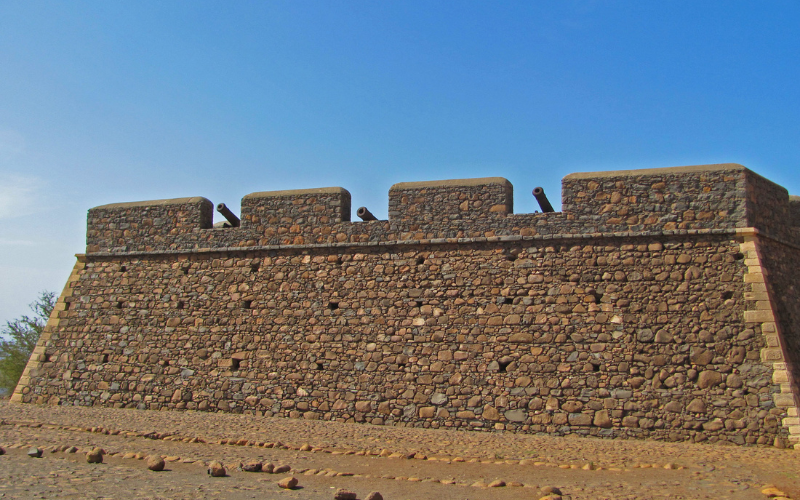
This is where it all began. Cidade Velha, founded in the 15th century, was the first European colonial settlement in the tropics and the gateway of the Atlantic slave trade; UNESCO listed it in 2009. You can stroll along Banana Street, climb to Fort Real de São Filipe for views over the bay, and step into the Nossa Senhora do Rosário church, whose construction dates back to 1495. Allow half a day for a peaceful visit, ideally in the morning before the heat sets in.
The island’s other major site is of a very different character: the Tarrafal camp, opened in 1936 by Salazar’s regime to imprison opponents, now a memorial. It appears on Cape Verde’s tentative list for UNESCO, but is not yet inscribed. For fresh air, the Serra Malagueta, to the north, offers trails above the valleys and its natural park; it’s easier to explore with a driver or a guide. Our page What to do in Santiago details the stops, Praia included.
Fogo: Climbing the Volcano
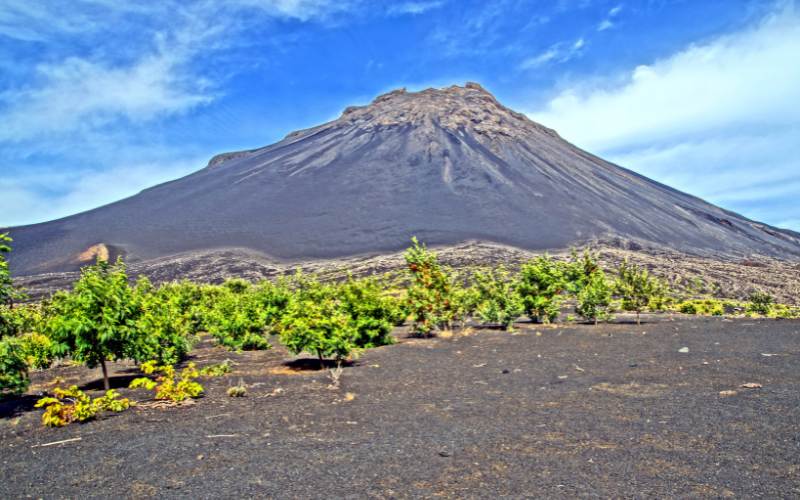
On Fogo, everything revolves around Pico do Fogo, 2,829 m, rising above a caldera where people still live, in Chã das Caldeiras. The last eruption lasted from 23 November 2014 to 8 February 2015 and covered part of the villages; visiting that cooled lava flow is impressive in itself.
The climb starts at around 1,700 m for a gain of nearly 1,000 m over unstable ash slopes: it’s not technically difficult, but it’s tiring, and the ascent takes several hours. Start early and go with a local guide. If the summit doesn’t appeal, a walk in the caldera, the vineyards and a tasting of local wine are reason enough to make the detour. The partner agency can arrange the climb with a local guide, and our page What to do on Fogo covers the rest of the island.
Santo Antão: The Island of Walkers
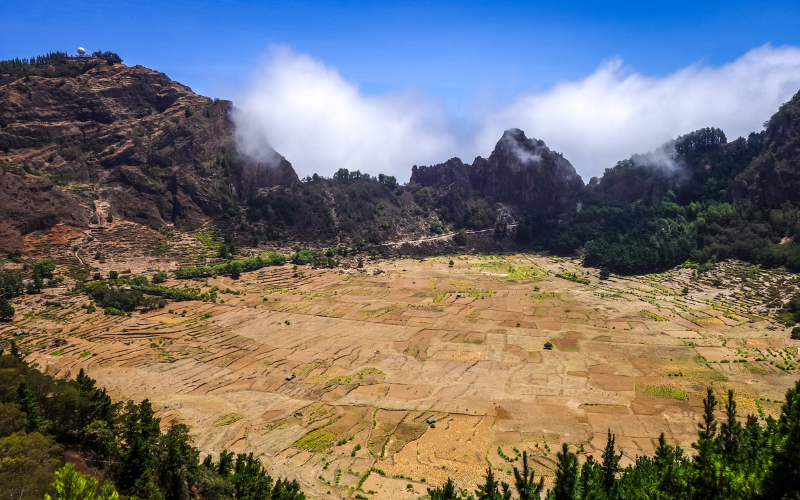
If you only walk one day in Cape Verde, make it here. The descent from the Cova crater (around 1,200 m) down to Paul Valley passes through terraces of sugarcane, banana trees and small villages; it is considered the country’s most renowned hike. Around Ribeira Grande, other trails follow the ridges and valleys.
You get there by ferry from Mindelo to Porto Novo, which makes it a natural pairing with São Vicente. The trails are steep and the mist can roll in quickly: we detail the routes in the best hiking routes on Santo Antão, including the question of whether to hire a guide. If you’re unsure about your fitness level, ask for a route suited to your fitness.
São Vicente: Mindelo and Its Nights
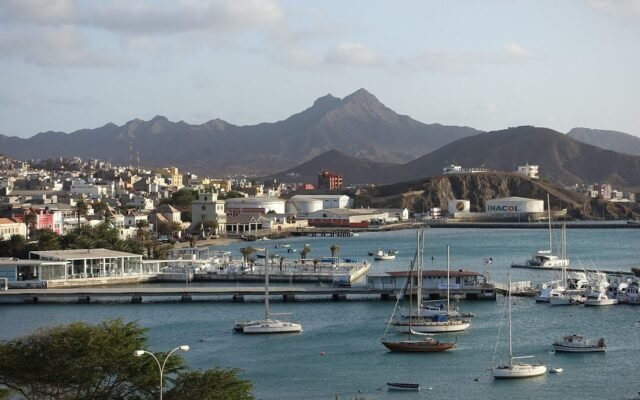
Mindelo is a city best explored on foot: the colonial waterfront, the fish market, Lisbon Street and, above all, the bars where morna and coladeira are played live almost every evening. This is also where the carnival, inspired by Rio’s, takes over the streets on Shrove Tuesday, which falls on 9 February in 2027. Accommodation fills up very early at this time of year. Our ideas for Mindelo complete this overview.

Sal and Boa Vista: Sea and Turtles
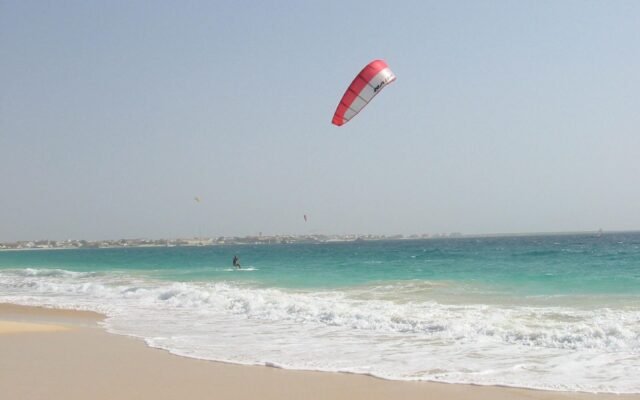
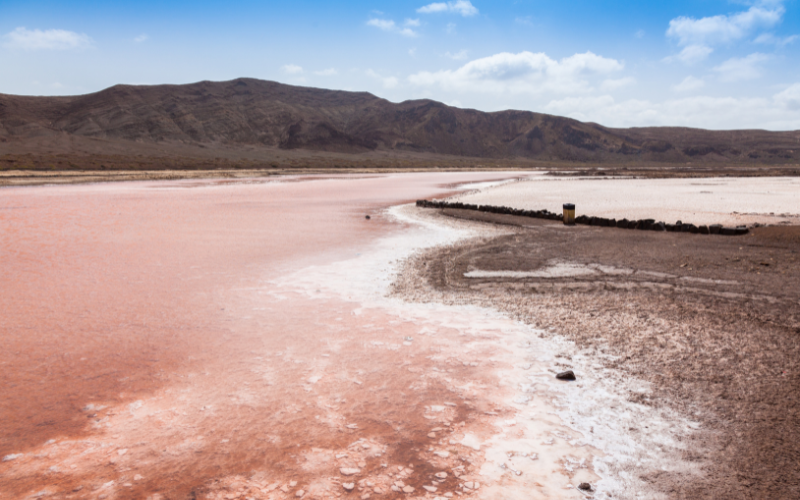
These two flat islands are the most touristy. Sal offers Santa Maria, its calm waters and kitesurfing; the Pedra de Lume salt flats are also worth a visit. Boa Vista has long beaches and dunes, but its true highlight is the loggerhead turtle season: nesting runs from June to October, and the next season opens in June 2027. Cape Verde hosts one of the largest nesting populations in the Atlantic, most of it on Boa Vista. Nesting beaches may only be visited with approved operators, in small groups, and without white torches.
Our guide to the beaches will help you choose between the two. To organise a turtle outing with an approved operator, ask the local agency what is possible for your dates.
Brava, São Nicolau, Maio: The Quiet Islands
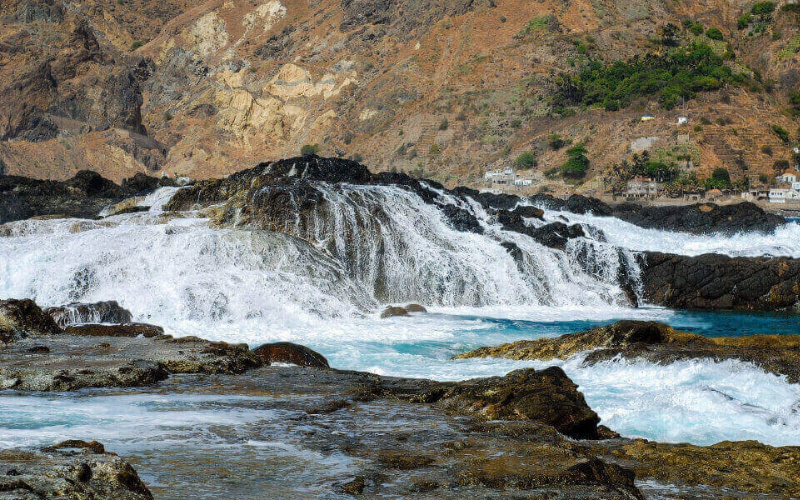
Brava, the island of flowers, is reached by boat from Fogo and rewards the effort: Nova Sintra, hanging villages, the natural rock pools of Fajã de Água. São Nicolau offers Monte Gordo, its ridges and a wilder sea; Maio, its salt flats and almost empty beaches. These islands are for those who prefer calm to liveliness, best added on a second trip or a long stay.
Which Islands to Choose Based on Your Profile?
| Profile | Recommended combination | Good to know |
|---|---|---|
| One week, discovery | Santiago + Fogo | History, volcano, local life |
| Hiker | São Vicente + Santo Antão | Mindelo–Porto Novo ferry |
| Beach and relaxation | Sal or Boa Vista | One island is enough |
| Culture and music | São Vicente + Santiago | Carnival in February |
Inter-island flights are operated by CVsky since 29 March 2026, and ferries by CV Interilhas: it’s best to limit island changes to two or three per trip. To build a realistic itinerary, talk to the partner agency about your duration and budget.
Planning a trip to Cape Verde?
Tell us about your project: we’ll connect you with a local agency that knows every island and will prepare a proposal tailored to your interests and budget.
Before You Go
Cidade Velha, Tarrafal or the streets of Mindelo take on a different meaning once you know the history of Cape Verde: a short read that changes the way you visit.
Frequently Asked Questions
What is the most beautiful place in Cape Verde?
It depends on what you’re looking for: Paul Valley on Santo Antão for scenery, Pico do Fogo for the volcano, Santa Maria on Sal for the beach. If you can only pick one for its uniqueness, Fogo is the most striking.
What are the 7 wonders of Cape Verde?
There is no official list of seven wonders. The sites most often cited are Cidade Velha, Pico do Fogo, Paul Valley, Mindelo, Santa Maria, the dunes of Boa Vista and the Pedra de Lume salt flats.
Is Cape Verde worth visiting?
Yes if you enjoy variety: volcano, hiking, music and beaches can all fit into a single week. No if you’re only looking for a big city or one single landscape, since each island is small and very different from the others.
Sources
- UNESCO – Cidade Velha, Historic Centre of Ribeira Grande (accessed 2026-11)
- UNESCO – Tentative list: Tarrafal concentration camp (accessed 2026-11)
- World Heritage in Cabo Verde (accessed 2026-11)
- Inforpress – Tarrafal Concentration Camp (accessed 2026-11)
- Pico do Fogo (accessed 2026-11)
- Lonely Planet – Hiking Pico do Fogo (accessed 2026-11)
- 2014-15 eruption of Fogo (accessed 2026-11)
- Routard – Cova Crater (accessed 2026-11)
- Lonely Planet – What to do on Santo Antão (accessed 2026-11)
- Partir.com – The best hikes in Cape Verde (accessed 2026-11)
- Figaro Nautisme – Sea turtle season in Cape Verde (accessed 2026-11)
- Turtle Foundation – Cape Verde (accessed 2026-11)
- Cape Verde Guide – Festivals and Music (accessed 2026-11)
Would you like to see these places?
The local agency builds your itinerary around what you enjoy. Free request, no obligation.

Written by Adilson Gomes Garcia
Founder of Casa di CV and Gomia-Voyage, I was born in Santiago and I am committed to showcasing African territories, starting with Cape Verde. Through my platforms, I help travelers and curious minds better understand these destinations, their cultures and their realities, so they can plan authentic and respectful trips. My goal: to offer a clear, local and useful perspective for discovering Africa as it really is, with its riches and its identity.